Tell us about the job
Takes about a minute. No obligation.
Sizing a furnace for a Millard County home is not a step a contractor can estimate loosely and correct later. Homes in Millard County, UT run heat about eight months a year, from October through May. The burner and heat exchanger carry that load across the vast majority of the year, and a unit that is undersized relative to the actual heat loss of the house runs longer cycles to compensate, accelerating wear on the ignition system and the heat exchanger itself. A contractor has to establish the real heat loss of the structure before settling on equipment, because an undersized unit installed here degrades faster than the same unit installed where the heating season is brief.
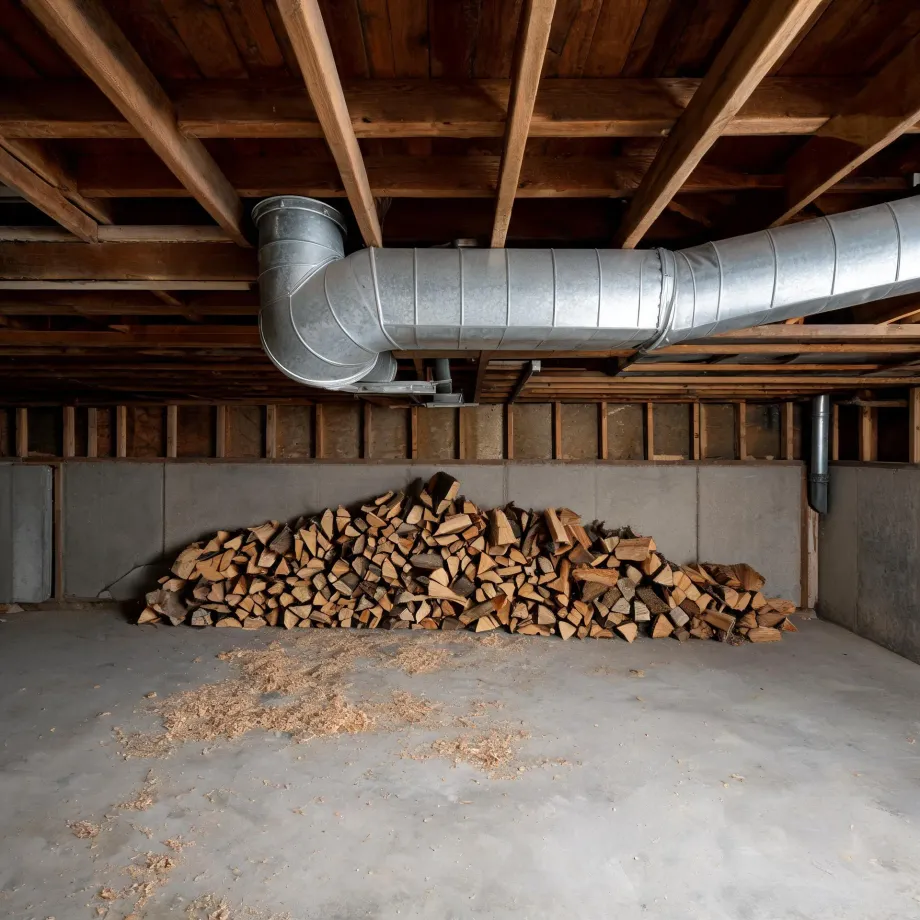
Existing ductwork is what a furnace installation turns on in Millard County, and much of the housing stock was built to move air for systems that are long gone. Half the homes in Millard County, Utah were built in 1974 or earlier (2020-2024 ACS 5-year). That gap between what the ducts were sized for and what a new furnace needs to push through them is where a contractor spends real time. Electrical service in houses of this vintage was laid in for a different load than modern equipment draws, and both have to be assessed before a unit is ever ordered. The ductwork is the variable that can kill a straightforward install.
What Gets Installed With a New Furnace
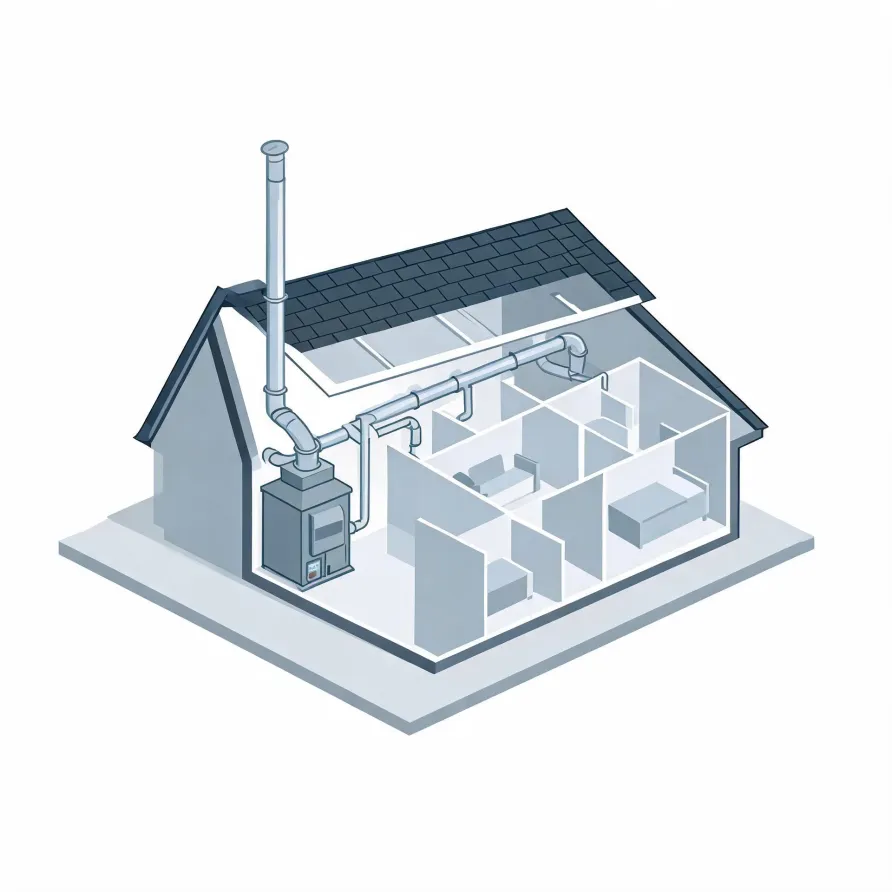
The furnace itself sits in a mechanical room, basement, or utility closet and is the piece doing the heating work. A contractor mounts the heat exchanger and burner assembly inside that cabinet, connects the gas line, and sets the flue pipe to carry combustion gases out of the house through a wall or roof penetration.
The air handler and blower sit inside or directly beside the furnace cabinet and push conditioned air into the duct system. The thermostat goes on an interior wall where it reads room temperature and signals the furnace to fire. A contractor also installs the condensate drain line and any fresh-air intake piping the equipment requires.
The drawing shows a typical layout, and a licensed contractor determines what applies to your specific home.
Get matched in Millard CountyMillard County, by the record
72 severe weather events were recorded in Millard County, Utah between 2015 and 2024.
NOAA National Centers for Environmental Information, Storm Events Database, bulk CSV export, events 2015-01-01 through 2024-12-31.Half the homes in Millard County, Utah were built in 1974 or earlier (2020-2024 ACS 5-year).
U.S. Census Bureau, 2020-2024 American Community Survey 5-Year EstimatesMillard County, Utah holds 5,045 housing units (2020-2024 ACS 5-year).
U.S. Census Bureau, 2020-2024 American Community Survey 5-Year EstimatesOwners occupy 81.8% of the occupied homes in Millard County, Utah (2020-2024 ACS 5-year).
U.S. Census Bureau, 2020-2024 American Community Survey 5-Year EstimatesFurnace Installation Rules & Standards for Millard County, Utah6 sourced rules and standards
What the Installation Actually Looks Like
Non-weatherized gas furnaces manufactured on or after November 19, 2015 must reach 80.0 percent AFUE.
Non-weatherized oil-fired furnaces manufactured on or after November 19, 2015 must reach 83.0 percent AFUE.
Mobile home gas furnaces manufactured on or after November 19, 2015 must reach 80.0 percent AFUE.
Non-weatherized gas furnaces manufactured on or after December 18, 2028 must reach 95.0 percent AFUE, up from the 80.0 percent minimum that applies to units manufactured before that date.
Licensing Rules for Contractors in Millard County, Utah
Utah’s contractor licence does not reach alteration, repair, remodelling or improvement of a building worth less than $7,000 in labour and materials together, counting every change and addition to the agreed work — though the plumbing and electrical trades are pulled back under licensure even below that figure.
Utah requires a state licence before engaging in a licensed construction trade or contracting activity, and HVAC contractor is one of the licence classifications the state issues.
Severe Weather Events in Millard County
Millard County's climate puts real load on heating equipment, and that load shapes what a furnace needs to handle over its life. How hard the weather bears down here is a local fact, and it belongs in any honest conversation about installation.
72 severe weather events, 2016–2024. Source: NOAA National Centers for Environmental Information, Storm Events Database.