Tell us about the job
Takes about a minute. No obligation.
A contractor quoting a furnace installation in Juab County has to account for what the burner and ignition system will actually be asked to do before they can size the equipment correctly. Homes in Juab County, UT run heat about eight months a year, from October through May. The heat exchanger and ignition components carry that load every cycle, and a system that is undersized or installed with duct runs that make it work harder will accumulate wear on those parts well ahead of schedule. Getting the load calculation right at the start is what keeps a replacement from arriving earlier than it should.
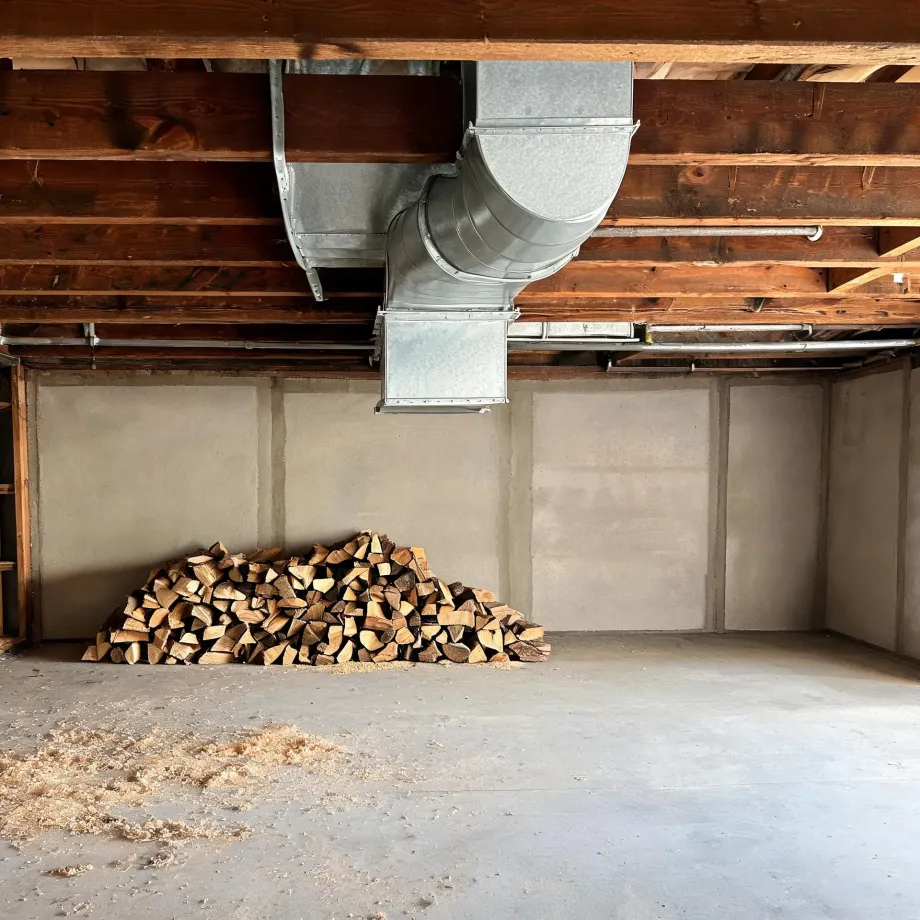
Ductwork laid out for a furnace from a prior generation carries the decisions of whoever built the house: where the trunk runs, how the branches split, what the registers can move. Half the homes in Juab County, Utah were built in 1982 or earlier (2020-2024 ACS 5-year). A contractor installing a new furnace here checks whether that existing duct layout can deliver what the new unit produces, and whether the electrical service will carry the load. Those two questions decide the scope of the job before the furnace itself is even priced.
What Gets Installed With a New Furnace
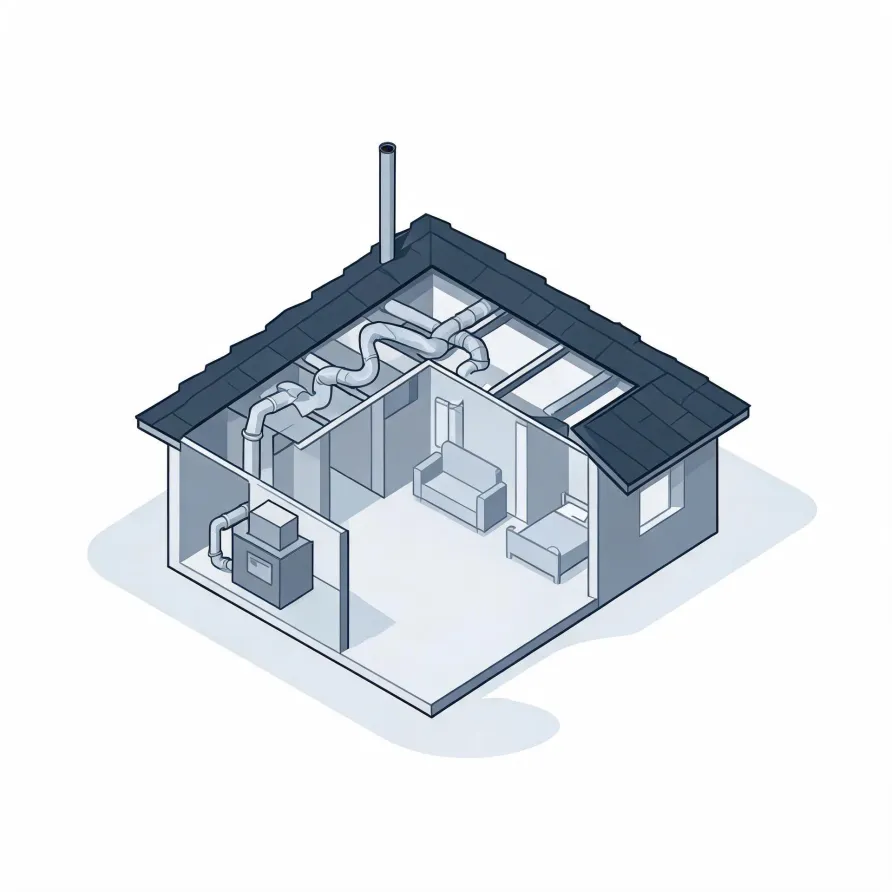
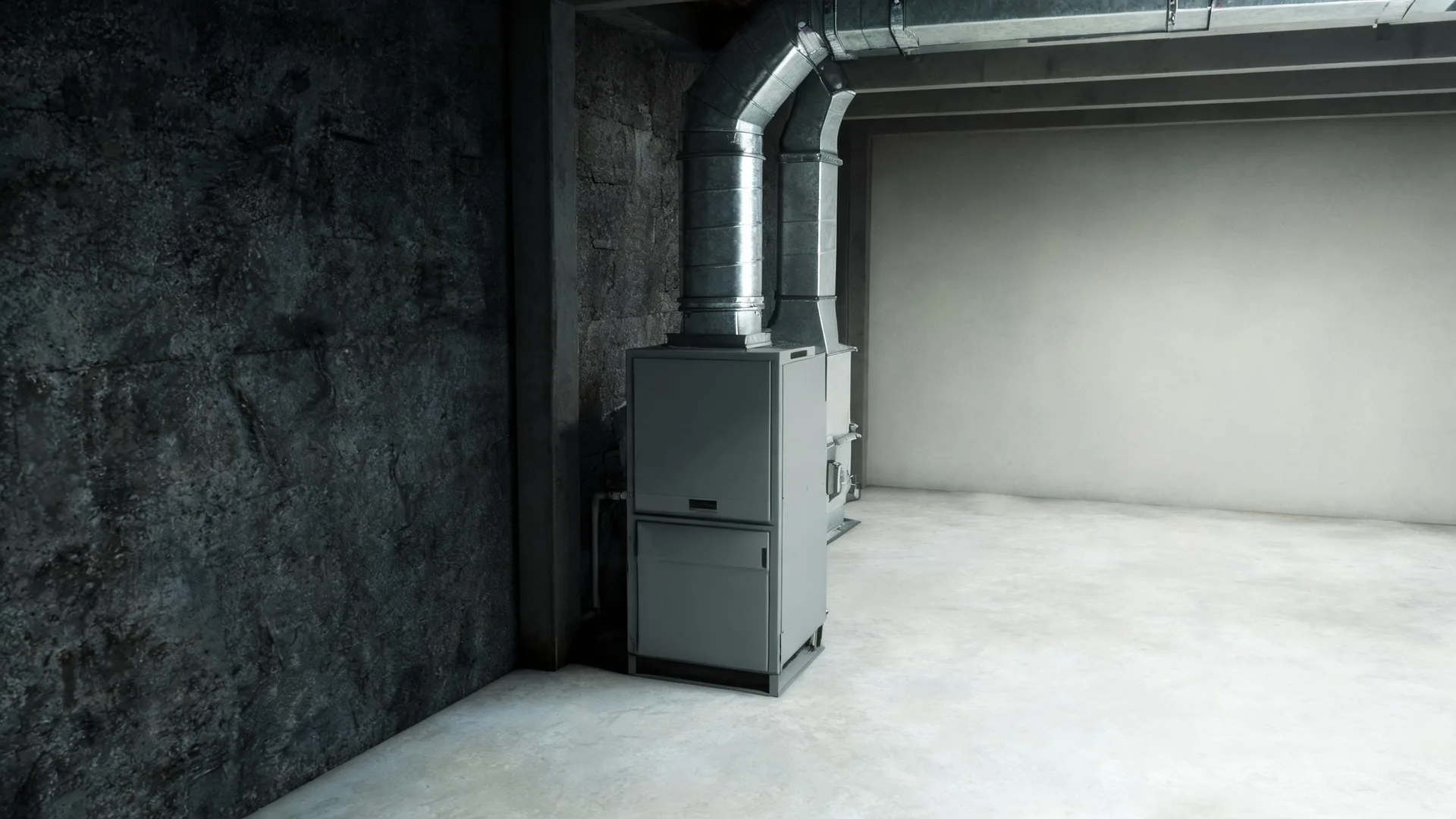
The furnace itself sits in a utility room, basement, or closet and is the piece doing the heating work. A heat exchanger inside it warms the air that moves through your home, and a burner assembly feeds that exchanger with combustion from the gas supply line connected at the unit.
A flue pipe runs from the furnace up and out of the house, carrying combustion exhaust away from the living space. Alongside the furnace, a thermostat mounts on an interior wall and serves as the control point that tells the system when to fire and when to stop.
The drawing shows a typical layout, and a licensed contractor determines exactly what applies to your house and its setup.
Get matched in Juab CountyJuab County, by the numbers
123 severe weather events were recorded in Juab County, Utah between 2015 and 2024.
NOAA National Centers for Environmental Information, Storm Events Database, bulk CSV export, events 2015-01-01 through 2024-12-31.Half the homes in Juab County, Utah were built in 1982 or earlier (2020-2024 ACS 5-year).
U.S. Census Bureau, 2020-2024 American Community Survey 5-Year EstimatesJuab County, Utah holds 4,080 housing units (2020-2024 ACS 5-year).
U.S. Census Bureau, 2020-2024 American Community Survey 5-Year EstimatesOwners occupy 83.8% of the occupied homes in Juab County, Utah (2020-2024 ACS 5-year).
U.S. Census Bureau, 2020-2024 American Community Survey 5-Year EstimatesFurnace Installation Rules for Juab County, Utah6 sourced standards and codes
What happens when the contractor arrives
Non-weatherized gas furnaces manufactured on or after November 19, 2015 must reach 80.0 percent AFUE.
Non-weatherized oil-fired furnaces manufactured on or after November 19, 2015 must reach 83.0 percent AFUE.
Mobile home gas furnaces manufactured on or after November 19, 2015 must reach 80.0 percent AFUE.
Non-weatherized gas furnaces manufactured on or after December 18, 2028 must reach 95.0 percent AFUE, up from the 80.0 percent minimum that applies to units manufactured before that date.
Licensing Rules for HVAC Work in Juab County, Utah
Utah’s contractor licence does not reach alteration, repair, remodelling or improvement of a building worth less than $7,000 in labour and materials together, counting every change and addition to the agreed work — though the plumbing and electrical trades are pulled back under licensure even below that figure.
Utah requires a state licence before engaging in a licensed construction trade or contracting activity, and HVAC contractor is one of the licence classifications the state issues.
Severe Weather Events in Juab County
Juab County's climate puts real demands on heating equipment, and those demands shift with how hard the weather runs in a given year. A furnace sized and installed for local conditions holds up where a generic job falls short.
123 severe weather events, 2016–2024. Source: NOAA National Centers for Environmental Information, Storm Events Database.