Tell us about the job
Takes about a minute. No obligation.
A contractor quoting a furnace installation in Iron County has to size the equipment for a real working load, not a mild one. Homes in Iron County, UT run heat about eight months a year, from October through May. The burner, the heat exchanger, and the ignition system cycle through that entire stretch, accumulating wear that a system in a shorter-season climate spreads over more idle time. An undersized unit runs longer per call and a poorly sealed installation loses heat before it reaches the rooms, and both failures compound across years of continuous use. Sizing has to be right from the start.
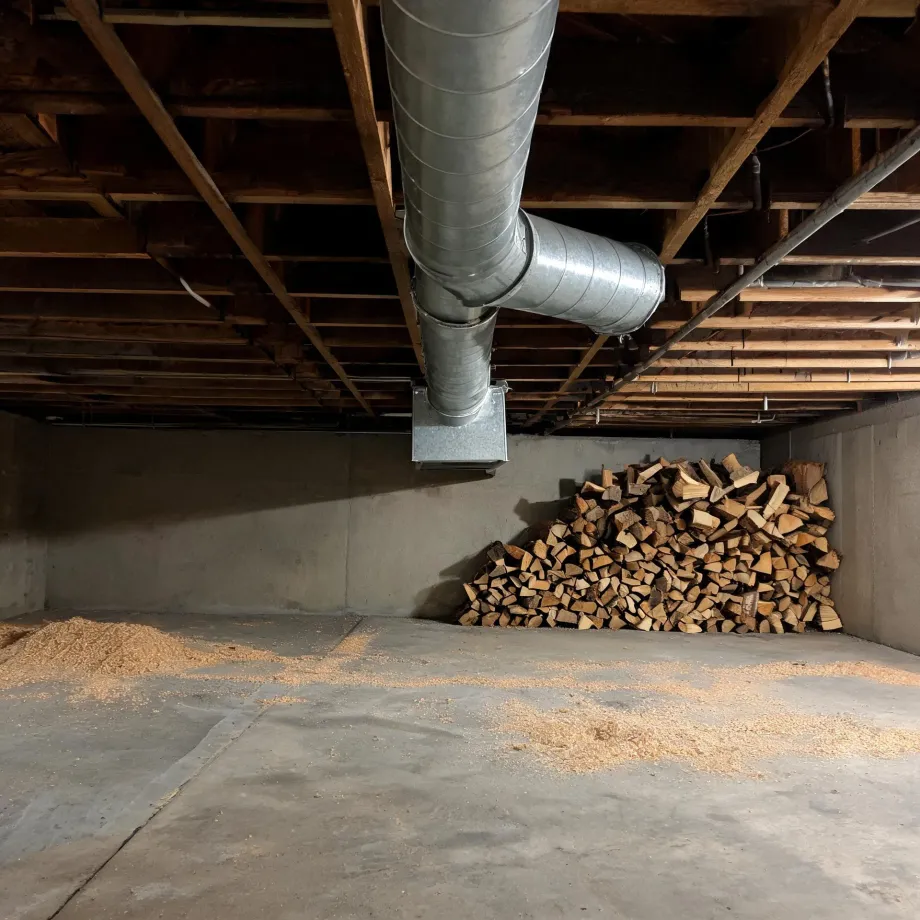
Ductwork sized for a previous system does not automatically carry a new one, and in Iron County that is the first thing a contractor has to settle before a furnace installation can be quoted accurately. Half the homes in Iron County, Utah were built in 1997 or earlier (2020-2024 ACS 5-year). That means a large share of the housing here was built around equipment that has since been swapped out at least once, leaving duct runs and electrical service that were laid in for something different from what will connect to them now. A contractor pulling the specifications on a new furnace and then opening the duct system to measure what is actually there may find the two do not line up, and that gap is where the real scope of the job lives.
What Gets Installed With a New Furnace
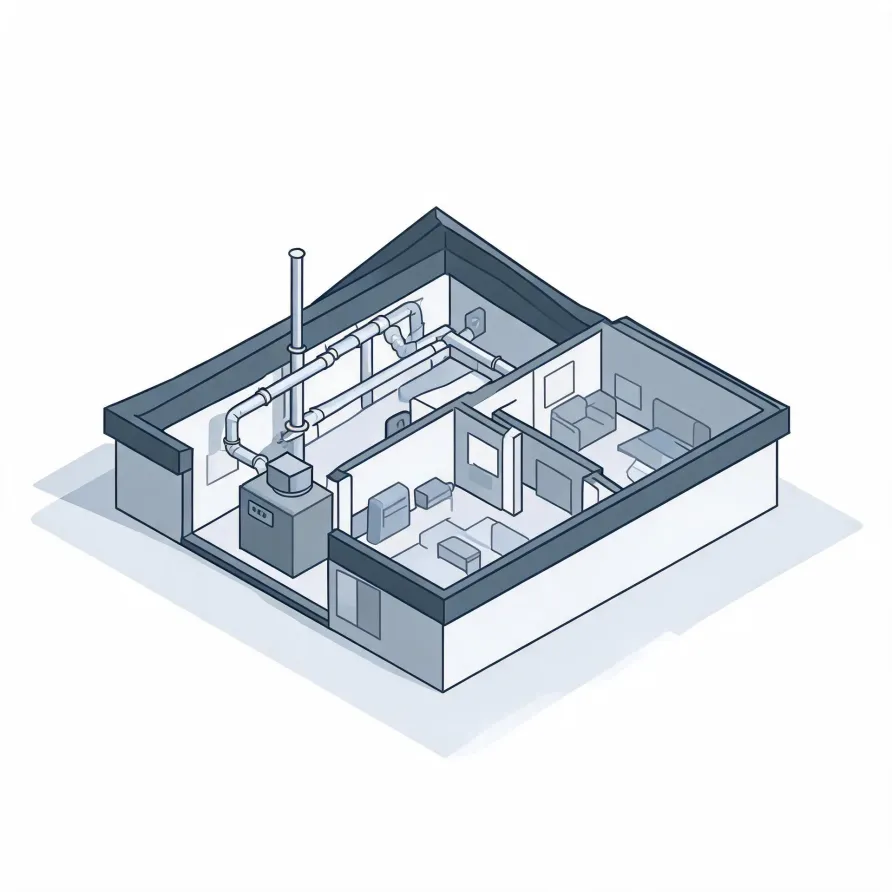
The furnace itself sits in a utility room, basement, or closet and is the piece doing the work of heating the air. A heat exchanger inside the cabinet warms the air that passes through it, and a blower motor pushes that air out into the house. These are the core pieces a homeowner is buying.
The flue pipe runs from the furnace to an exterior wall or through the roof, carrying combustion gases out of the house. Alongside the furnace, a thermostat goes on an interior wall and gives the homeowner control over when the system runs and at what temperature.
The drawing shows a typical layout, and a licensed contractor determines exactly what applies to this house.
Get matched in Iron CountyIron County, Utah, by the numbers
77 severe weather events were recorded in Iron County, Utah between 2015 and 2024.
NOAA National Centers for Environmental Information, Storm Events Database, bulk CSV export, events 2015-01-01 through 2024-12-31.Half the homes in Iron County, Utah were built in 1997 or earlier (2020-2024 ACS 5-year).
U.S. Census Bureau, 2020-2024 American Community Survey 5-Year EstimatesIron County, Utah holds 23,550 housing units (2020-2024 ACS 5-year).
U.S. Census Bureau, 2020-2024 American Community Survey 5-Year EstimatesOwners occupy 68.3% of the occupied homes in Iron County, Utah (2020-2024 ACS 5-year).
U.S. Census Bureau, 2020-2024 American Community Survey 5-Year EstimatesCodes & Standards Behind Furnace Installation in Iron County, Utah6 sourced rules & standards
What the installation actually looks like
Non-weatherized gas furnaces manufactured on or after November 19, 2015 must reach 80.0 percent AFUE.
Non-weatherized oil-fired furnaces manufactured on or after November 19, 2015 must reach 83.0 percent AFUE.
Mobile home gas furnaces manufactured on or after November 19, 2015 must reach 80.0 percent AFUE.
Non-weatherized gas furnaces manufactured on or after December 18, 2028 must reach 95.0 percent AFUE, up from the 80.0 percent minimum that applies to units manufactured before that date.
Licensing Rules for Iron County, Utah
Utah’s contractor licence does not reach alteration, repair, remodelling or improvement of a building worth less than $7,000 in labour and materials together, counting every change and addition to the agreed work — though the plumbing and electrical trades are pulled back under licensure even below that figure.
Utah requires a state licence before engaging in a licensed construction trade or contracting activity, and HVAC contractor is one of the licence classifications the state issues.
Severe Weather Events in Iron County
Iron County's climate puts real demand on heating equipment, and that demand is not the same everywhere in Utah. A furnace sized and installed for local conditions handles the workload that local weather actually creates.
77 severe weather events, 2015–2024. Source: NOAA National Centers for Environmental Information, Storm Events Database.