











Why your furnace smells like burning in Utah

Step 1 of 3: Equipment

Why does my furnace smell like it's burning?

You turned the furnace on for the first time this fall and caught a burning smell coming from the vents. Maybe it's faint, maybe it filled the room. Either way you shut it off or you're standing there wondering if it's safe to let it keep running, and whether this is something that fixes itself after a few minutes or something that needs a tech out to look at it.

Dust burning off is normal. A sharp or lasting smell is not.

The first time your furnace fires up after sitting idle all summer, dust that settled on the burners and heat exchanger burns off and makes a smell, usually gone within 20 or 30 minutes. That part is normal here, where the furnace sits unused for months at a time. What isn't normal is a smell that lingers past that first run, a sharp electrical or plastic odor, or a smell that comes back every time the furnace cycles. That points to something else: a dirty filter restricting airflow, a crack in the heat exchanger, or a wiring problem inside the unit. Any of those is worth having a licensed tech look at before you run the furnace again.

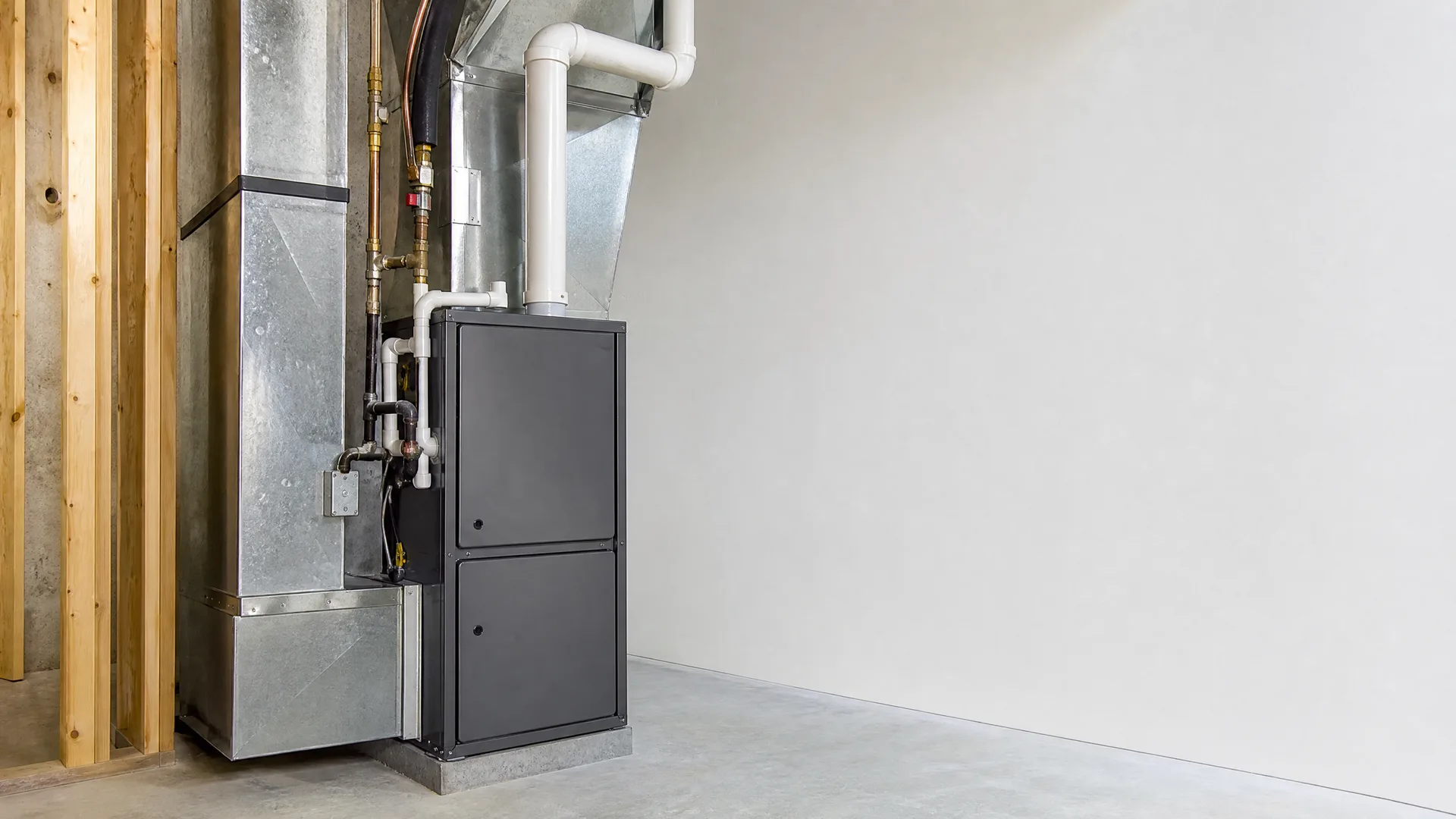
A dark gray furnace connected to galvanized sheet-metal ductwork, white PVC vent pipes and copper piping, standing against a plain light wall in a room with a bare concrete floor and exposed wood framing at left.

Dust burning off the heat exchanger

After months of sitting idle since spring, the furnace collects dust on the burners and heat exchanger. The first few times it fires up this fall, that dust burns off and sends a faint smell through the vents. It should clear within an hour or so of the furnace running. If it doesn't fade, or if it comes back every time the furnace cycles on, something else is causing it.

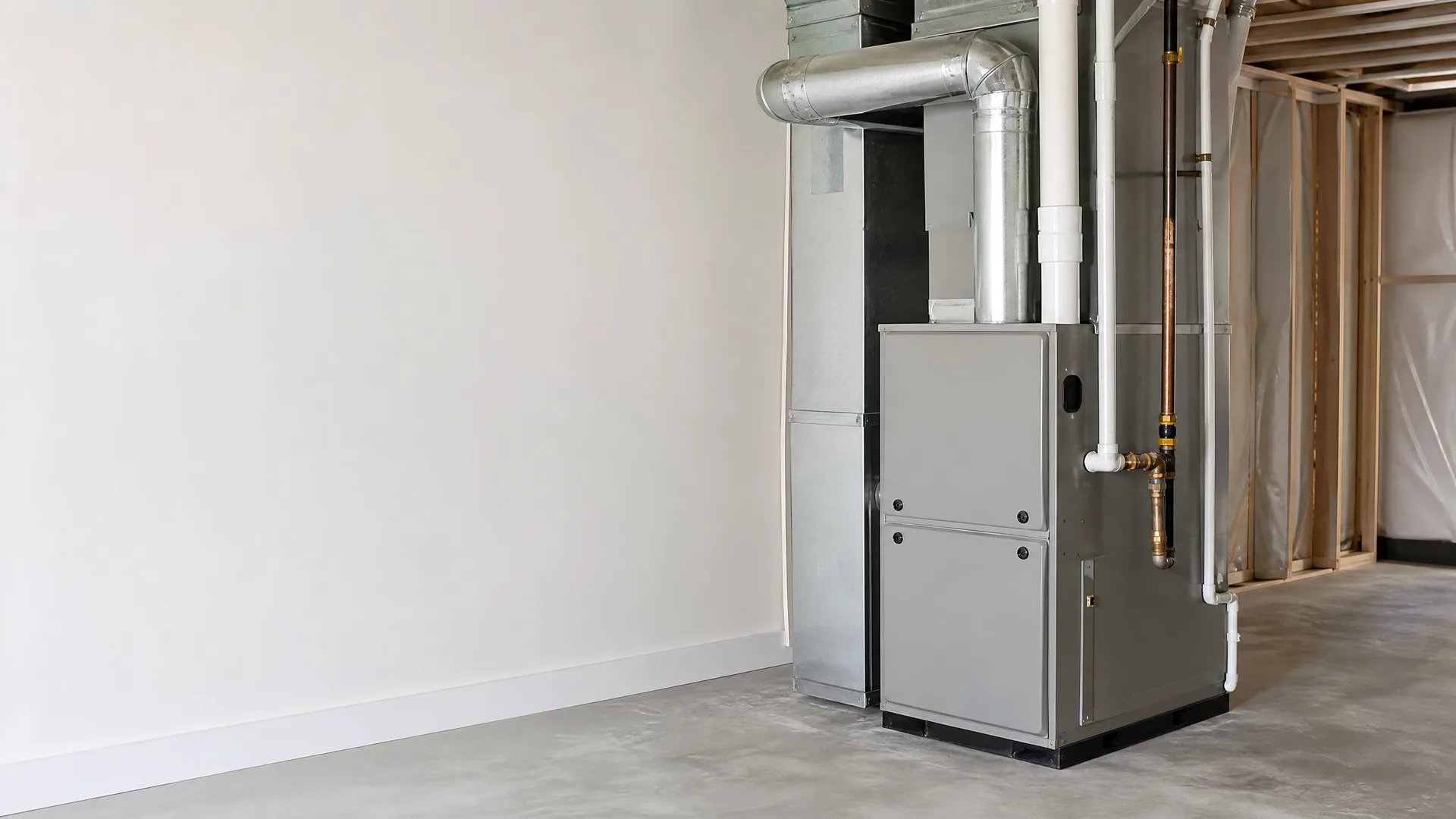
A gray high-efficiency furnace with sheet-metal ductwork, white PVC vent pipes and copper piping stands against a wall in an unfinished basement with a concrete floor and insulated wood stud framing at right.

A smell that doesn't go away

A burning smell that lingers past the first hour, or shows up again weeks into the season, usually means something is overheating. A clogged filter forces the blower to work harder and can heat up the motor. A cracked heat exchanger or a failing igniter can do the same. None of these clear up on their own, and running the furnace while the smell continues can let a small problem turn into a bigger repair.

Burning Smell: Wait It Out or Call

Smell fades on its own

  • The smell is faint and mostly gone within an hour of the furnace running.
  • It only happened the first time you fired the furnace up this fall, not every cycle since.
  • You don't see smoke, and no breaker tripped or igniter clicked repeatedly trying to light.
  • The smell is dust burning off, not plastic, not gas, not anything sharp or chemical.
  • Nothing smells hot to the touch near the furnace cabinet or the vents themselves.

Smell means call someone

  • The smell is still there after the furnace has run a full cycle or two.
  • It smells like plastic, metal, or something electrical rather than dust burning off.
  • You notice soot near the vents, or the flame through the furnace's viewing window looks yellow instead of blue.
  • The smell comes with a headache, nausea, or a rotten egg odor, which points to gas, not dust.
  • The furnace is shutting off on its own or struggling to stay lit after the smell shows up.
A smiling man in a gray long-sleeved shirt stands in a kitchen looking to the side, with open shelves of dishes, a white mug on the counter, a potted plant, and a view through a doorway into a living room.
A smiling bearded man in a green sweater sits at a white marble kitchen island with a mug, potted plant and bowl of fruit, in a bright white interior with open shelving and an arched doorway.
A smiling man with dark curly hair and a beard, wearing a dark green knit sweater, stands at a white marble kitchen counter with a dark blue mug, with open shelving, pendant lights and a houseplant behind him.
A smiling man in a green ribbed sweater stands behind a wooden table holding a ceramic mug of coffee in a kitchen with white subway tile, shelves of potted plants, and a bowl of fruit.
A gray high-efficiency furnace with white PVC vent pipes stands against a concrete basement wall beside sheet-metal ductwork, a small condensate pump on the floor, and exposed wood framing at left.
A furnace burning dust off a clean start smells faint for a few minutes and then it's done, nothing more to check.
A gray sheet-metal furnace with flue pipe and adjacent ductwork stands against a stone basement wall on a concrete floor, with white PVC and metal pipes running nearby.
A furnace crowded by old gas lines and flex tubing in a cramped basement is one loose fitting away from a smell that doesn't go away.

What's Actually Burning In There

  • The igniter glows hot enough to light gas, and a hairline crack in it can smell like something scorching.
  • A cracked heat exchanger lets flue gas leak into the air stream instead of venting outside, and that often carries a sharper, metallic smell.
  • A clogged filter starves the furnace of airflow, so the blower motor runs hotter than it should and the smell comes from the motor housing, not the burners.
  • If the smell comes with a flickering flame or the burners cycling on and off fast, the flame sensor or igniter is likely failing, not just dusty.
  • A smell that returns every time the furnace kicks on, cycle after cycle, points to something inside still running hot, not a one-time startup burn.

Gas furnaces light with a hot surface igniter, a small ceramic strip that glows enough to catch the burner flame. That igniter sits right in the path of the air the blower pushes out, so when it's cracked or failing, whatever smell it gives off goes straight through your vents. That's different from the heat exchanger, the metal chamber that keeps combustion gas separated from the air circulating through your house. A crack there lets flue gas mix into that air stream, and because flue gas carries sulfur and metal from the burner, it tends to smell sharper and more chemical than a dusty startup smell. Airflow plays into this too. The filter's job is to keep dust out of the blower motor and the ductwork, not to help the burners breathe. But a filter clogged enough restricts the air the blower pulls through, and the motor works harder and runs hotter to compensate. That heat can show up as a burning smell coming from the motor housing itself, nowhere near the flame. Watch what the furnace is doing while you smell it. A flame that flickers, or burners that cycle on and off faster than they should, usually means the flame sensor or igniter is already on its way out, not just coated in dust. The timing matters as much as the smell. One burn-off on a cold start is normal. The same smell showing up every single cycle means something inside is staying hot, and that's not something that clears up on its own.

A smiling man in a dark blue T-shirt sits on a light gray sofa in a living room with a wooden shelf and window behind him, with a laptop edge visible in the foreground.
A bearded man in a plaid flannel shirt sits indoors looking out a window at snow-covered trees, with a steaming mug on the sill and wooden kitchen shelves behind him.
  1. The furnace draws air across dust settled on the burners since spring.

  2. The igniter heats up and lights the gas at the burners.

  3. Flames spread across the burner assembly and warm the heat exchanger.

  4. The blower pushes that warmed air past the hot dust and into your ducts.

Winter nights average 21°F statewide

On a 21°F night your furnace is running long stretches to hold the house steady, not just a quick cycle here and there. A burning smell that shows up under that kind of runtime is worth checking before the cold settles in for good.

NOAA nClimDiv 1991-2020 county normals weighted by homes

A metal furnace with louvered panels stands against a concrete basement wall, connected to sheet-metal ductwork and a round flue pipe, with wooden framing posts and a pipe nearby.
Before you get your furnace repair
A gray gas furnace stands on a concrete basement floor, connected to sheet-metal ductwork, white PVC vent pipes, and a yellow gas line, with plastic sheeting covering the walls.
After you get your furnace repair

Hand off the search today

Skip searching for a furnace pro and answer a few questions instead.

You're not committing to anything by asking.

The snow-covered gable end of a gray wood-clad building, with snow-laden conifers and falling snow behind it under an overcast sky.

Statewide, winter nights average 21°F, according to NOAA climate data. That kind of cold means your furnace isn't just kicking on for a few minutes here and there, it's running long stretches to keep the house warm through the night. A burning smell that shows up under that kind of load is different from the one-time dust burn-off at the start of the season. If the smell keeps coming back as the furnace runs longer each night, that's worth sorting out before the cold settles in for good, not after a pipe freezes or the furnace quits on the coldest night of the year.

NOAA nClimDiv 1991-2020 county normals weighted by homes

What's actually happening in your house right now

Walk through the rooms and check which ones carry the smell. If it's strongest near the furnace itself, that narrows things down. If you can smell it upstairs but not in the basement, the ducts are carrying it further than you'd expect. Touch the vent covers, some run warmer than others when something inside the furnace isn't burning clean. Look at the flame through the viewing window if your furnace has one: it should burn blue, steady, not yellow or flickering. Listen for anything different too, a rattle, a click that repeats, a hum that wasn't there last winter. None of this tells you exactly what's wrong, but it tells you whether this is worth a call now or worth watching for one more cycle.

A gray high-efficiency furnace in a basement with sheet-metal ductwork, white PVC vent pipes, metal plumbing lines, a condensate pump on the floor, and a window showing green trees outside.

Furnace running clean

The burners light, the heat exchanger warms, and the blower pushes that heat through the ductwork without any smell past the first startup. The gas piping and condensate lines run where they should, clear of anything that could crack a line or choke the burners with dust.


An older metal furnace with PVC and metal pipes stands on a concrete basement floor beside galvanized ductwork, with wooden stairs and a water tank in the background.

Furnace crowded and aging

Flexible gas lines and condensate pipes are packed in close around a unit coated in dust, with wood framing and stairs boxing in the space. A cramped, dusty setup like this makes it harder to spot a loose fitting or a cracked heat exchanger before the smell turns into something worse.

A wooden table in the foreground holds a closed laptop and a ceramic mug of coffee, with a spindle-back wooden chair behind it, a beige wall with paneled wainscoting, a window at left, and a kitchen counter with a cutting board, bowl of fruit and greenery at right.

What a burning smell costs you if you let it ride

A faint smell that fades after the first fall startup isn't asking anything of you. One that keeps coming back every time the furnace cycles is a different situation, and it's sitting in the same house where your family sleeps upstairs and the thermostat drops to 21°F on a cold night. A cracked heat exchanger or a loose gas fitting doesn't wait for a convenient week to get worse.

If this is past the first-burn smell, you're not looking at a quick fix you can put off while you shop around. You'd normally be stuck calling a few places, explaining the smell and when it happens all over again to each one, then waiting on quotes to see who can even get out to your house in Utah this week. Sending the form once skips that part. You're not diagnosing a cracked exchanger yourself, but you stop being the one tracking down who's free to look at it.

A gray upholstered sofa with a beige cushion and knit blanket beside a curtained window, with a white mug and a book on a dark wooden table in the foreground and a lit lamp in the background.
A basement utility area with a gray furnace, sheet-metal ductwork, pipes, plastic-covered walls, a concrete floor, and a black shelving unit holding storage bins.

This furnace is venting clean

The ductwork runs tight to the cabinet, the gas line and condensate pipes sit clear of the burners, and the cabinet itself is solid. Air moves through without picking up anything it shouldn't. A smell here means dust burning off, and it won't be back next cycle.

A gray metal furnace with louvered vent panels stands on a concrete basement floor beside galvanized ductwork, gas and plastic pipes, and foil-faced insulation along the ceiling and wall.

This one is worth a second look

Rust has worked across the cabinet, and the panel louvers sit close to a flex gas line with no room to spare. A furnace this old, boxed in like this, is more likely to have a cracked part than a clean one, and a smell that keeps returning deserves a look before you run it again.

A burning smell that fades after the first startup is dust clearing off the burners, and it's done its job once it's gone. One that keeps coming back, or smells sharp instead of dusty, means something in the furnace needs a look before the cold settles in for good. You already know the difference, since you're not the type to let a small problem sit until it's a cold house and a bigger repair. What you don't have to do is spend an evening searching through contractors, calling a few, explaining the smell and the furnace and the house all over again to each one, then sitting with quotes trying to guess who's worth the call. Send this one in and that part is off your plate. Someone who works on furnaces for a living takes it from here, and you go back to waiting for winter instead of waiting on hold.

The gabled roof peak of a house with a stone chimney, dark siding and wood brackets, framed against forested hills and a rocky mountain ridge under a cloudy sky.

Hand off the furnace problem

I'm done searching

It costs nothing to send, and you don't have to hire anyone.

A furnace smell that won't quit means another night deciding whether it's safe to run the heat. Send the request and you're done calling around for someone licensed to look at it. One form, and the search for help is off your plate.