Profile view of a bearded man wearing a dark green baseball cap and a dark gray T-shirt against a plain light background.

Why your furnace makes a banging noise in Utah

Step 1 of 3: Equipment

Why does my furnace make a banging noise when it starts?

A bang when the furnace kicks on isn't subtle, and it's enough to make you want to shut the whole thing off until someone looks at it. With gas furnaces running most homes through a Utah winter, that noise at startup usually points to one thing happening inside the burner compartment, and it's worth knowing what before you decide how urgent it is.

Gas is building up and igniting late instead of lighting right away

When the burners light on time, gas ignites in a steady, quiet flame. When the igniter is weak or the burners are dirty, gas can pool in the chamber for a second or two before it catches, and that delayed ignition goes off with a bang instead of a whoosh. It can also mean the ductwork is expanding as warm air hits it, which sounds similar but comes from a different place. Either way, a bang at startup is the furnace telling you something in that ignition process isn't working the way it should, and it tends to happen every time the furnace fires rather than once in a while.

A beige high-efficiency furnace with white PVC vent pipes stands beside galvanized sheet-metal ductwork in a basement with a concrete floor, exposed wood studs, and metal piping along the wall.

A clean start

The burner lights and the furnace settles into a steady run. No thump, no delay, just a quiet whoosh as the flame catches and the blower comes on a few seconds later. Ductwork and exhaust pipe stay put, because nothing inside is fighting to ignite.


An older beige furnace with a louvered vent panel stands on a concrete basement floor beside galvanized sheet-metal ductwork, a metal flue pipe and vertical pipes along a concrete wall.

A rough start

Gas builds up in the burner chamber before it catches, then lights all at once instead of smoothly. That small explosion is what you hear as a bang, and it can happen every single time the furnace cycles on through a Utah winter. Left alone, it stresses the heat exchanger.

Where Is the Bang Coming From

A delayed ignition bang

  • Gas builds in the burner chamber for a second or two before it finally lights, then it catches all at once.
  • The bang happens right as the burner fires, usually within the first few seconds after the blower kicks on.
  • A dirty burner or a failing igniter is often behind the delay, since either one slows down how fast the flame catches.
  • Left alone, repeated delayed ignition can stress the heat exchanger, since that's the part taking the force of each bang.
  • This kind of bang tends to happen every time the furnace starts, not just once in a while.

A metal expansion bang

  • The bang comes from the ductwork, not the burner, as warm air pushes into cold metal and makes it pop.
  • It happens a bit later in the cycle, once the air inside the ducts has had time to heat up.
  • Ducts that are undersized or have a flat stretch can flex more when the air pushes through, which makes the popping louder.
  • This kind of bang often shows up more on the coldest nights, when the metal starts out colder than usual.
  • It doesn't point to anything wrong with the burner or the ignition system inside the furnace itself.
A gray high-efficiency furnace with two PVC vent pipes stands in an unfinished basement beside sheet-metal ductwork, a framed and plastic-covered wall, and a bare concrete wall with vertical pipes.

Running the way it should

The burner fires, the flame spreads evenly across it, and the blower comes on without a sound out of place. The flue pipe stays quiet. Gas line, ductwork, everything sits still because nothing underneath is straining to move.

A gray furnace cabinet in a basement, connected to galvanized sheet-metal ductwork and white PVC pipes, against a concrete wall with exposed metal piping and insulation overhead.

Sitting on a pallet for a reason

A furnace raised up like this is usually sitting in a spot where water has pooled before, or still does. That same moisture works on the burner and the heat exchanger over time, and a bang on startup is often where it shows up first.

A smiling woman with dark shoulder-length hair in a cream V-neck sweater sits at a marble counter with a glass of red wine, with a kitchen and softly lit living room behind her.
A woman in a dark green sweater laughs while seated at a marble kitchen island with a glass of red wine, with open shelving, cabinets and a living room visible behind her.
A woman with long dark hair in a cream knit sweater laughs while looking off to the side, seated at a counter with a glass of red wine, in a dimly lit living room with a sofa, lamp, framed pictures and houseplant behind her.
A smiling woman with long dark hair in a beige sweater sits at a marble kitchen counter with a glass of red wine, with a dimly lit living room behind her.
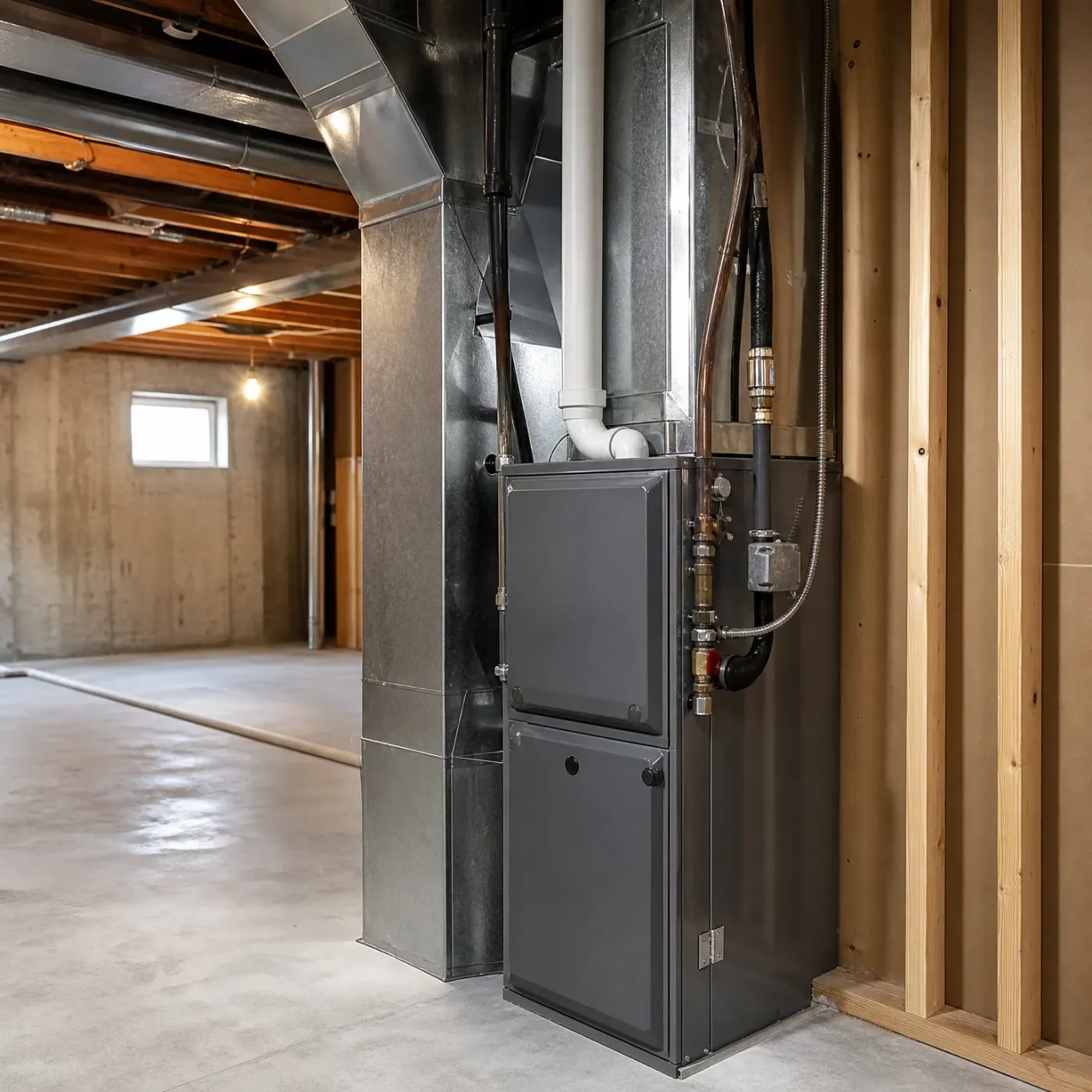
A gray furnace with copper and flexible piping stands against a wood-framed wall in an unfinished basement, connected to galvanized sheet-metal ductwork and PVC venting, with a concrete floor and exposed joists.

Get your furnace to the right pro

Describe your furnace job once, to one pro.

Describe your furnace job, and a local pro who handles it gets in touch.

Skip calling around

You're not committing to anything by asking.

Is this bang something to worry about at your house

You're probably hearing it from another room, a metallic thump from the furnace closet or basement right as the burner lights. Maybe the ductwork pops or ticks for a few seconds after. Some nights it's loud enough that someone in the house asks what that was. If it's happening every time the furnace starts, that's gas igniting late and all at once instead of catching clean, and each delayed light stresses the burner and the metal around it a little more. Left alone through a Utah winter, that heat exchanger takes the brunt of it, and a cracked one is a safety problem, not just a noisy one.

A gas furnace with two gray access panels stands against a plain wall in a basement, connected to sheet-metal ductwork, white PVC vent pipes, and a yellow gas line.

What the delay does to metal

Every time the burner lights late, the gas that built up in the chamber ignites faster than it would with a clean start. That small explosion pushes against the heat exchanger and the duct connected to it. Metal takes that hit once and flexes back. Do it every time the furnace cycles on, and the flexing works the same seams and joints over and over. A bang once in a while is one thing. A bang every cycle, all winter, is metal fatigue happening in a spot you can't see.

A gray high-efficiency furnace in a basement corner with white PVC vent pipes, copper and black gas piping, and sheet-metal ductwork beside a plain white wall and wooden stair framing.

Why the burner matters more than the duct

The thump sounds like it's coming from the ductwork, and sometimes it is, but the cause usually sits upstream at the burner. A dirty burner or a flame sensor reading wrong delays ignition by a second or two, and that gap is what lets gas pool before it catches. The duct popping is just the metal reacting to a pressure change that started somewhere else. Fixing the noise means looking at the burner first, not the pipe that's making the sound.

A man in a dark blue shirt stands in an open front doorway of a stucco and wood-clad house, facing a blond woman seen from behind in the foreground on a stone walkway.

What's actually happening inside the burner chamber

Open the panel on most gas furnaces and you'll find a row of burners lined up under the heat exchanger, each one fed by its own small port off the manifold. When the thermostat calls for heat, gas flows to all of them at once and the igniter or pilot lights the first one. The flame is supposed to roll sideways across the ports, burner to burner, so they all catch within a fraction of a second of each other. That's what a clean light-off looks like from the inside.

The bang happens when one or more ports are blocked or the gas pressure isn't even across the manifold, so the flame doesn't roll, it skips. Gas keeps feeding into a port that hasn't lit yet, and when it finally catches, it catches all that built-up gas in one burst instead of a steady spread. A furnace tech checking this would pull the burner assembly and look at each port, not just glance at the flame from outside. If you're not in a position to do that yourself, getting matched with someone who services furnaces in your area saves you the trouble of tracking one down and describing the noise over the phone more than once.

Interior corner with a beige sofa holding a dark green and a light cushion and a textured throw, a potted small-leaved tree beside a white-framed window, and a dark shallow bowl on a wooden coffee table in the foreground.
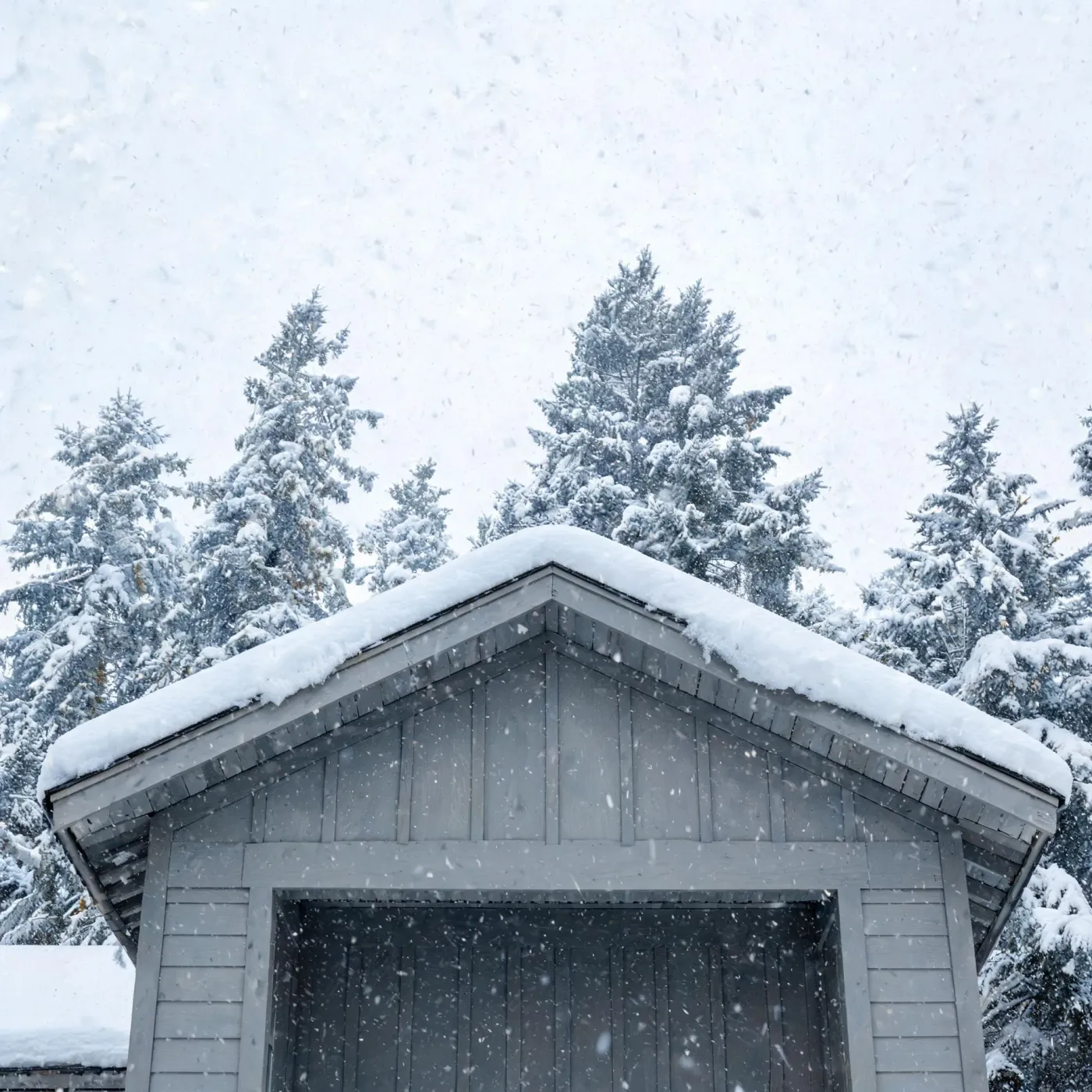
Gable end of a gray wood-clad building with a snow-covered roof and open doorway, backed by snow-laden conifers during falling snow.

Winter nights statewide average 21°F, according to NOAA climate data, and that's the kind of cold that keeps your furnace firing on and off most of the night rather than running once and staying quiet. Every one of those startups is another chance for a delayed ignition bang, because the burner has to relight cold air and cold metal each time. If your furnace already bangs on startup, a night in the low 20s isn't going to let it rest. More cycles means more chances to hear it, and more chances for that gas buildup to hit the heat exchanger before it's warmed up.

NOAA nClimDiv 1991-2020 county normals weighted by homes

A gray furnace cabinet in a basement with sheet-metal ductwork, white PVC vent pipes, and black gas piping against a concrete wall and wood-framed partition on a bare concrete floor.
A furnace with nothing wrong sits flush against sound metal ductwork, firing quietly cycle after cycle without a mark on it.
A gray metal furnace with two white PVC vent pipes stands on a concrete floor beside galvanized sheet-metal ductwork in a basement or utility space with wood framing.
This one shows surface rust on the cabinet and years of use on the plenum, the kind of wear a delayed bang adds to faster.

Winter nights average 21°F statewide

At 21°F overnight, your furnace is firing on and off most of the night just to hold the house steady. That's a lot of startups between dusk and dawn, and every delayed one adds another small hit to the same burner and heat exchanger.

NOAA nClimDiv 1991-2020 county normals weighted by homes

A bang at startup almost always comes down to gas lighting late, and each time it happens the burner and the heat exchanger take another small hit. That's the plain answer. It won't fix itself, and running it through another cold snap just adds more wear to metal that's already taking a beating. What it takes to sort out is someone who can get under the panel and look at the burners, the igniter, the flame sensor, whatever's causing the delay. You don't have to be the one who finds that person, calls around to see who's free, explains the thumping noise three different times to three different companies, then sits with a stack of quotes trying to work out who actually knows gas furnaces. Answer a few questions here and a contractor who handles this where you live gets in touch with you instead. The noise has a cause. Someone qualified can find it.

A covered porch with a wood front door with six upper glass panes, a lantern wall sconce, tapered column on a stone base, potted ferns and flowers, a woven doormat, and wide steps leading to a paver walkway bordered by shrubs and white hydrangeas.
A beige upholstered sofa with a cream cushion and chunky knit throw sits beside a white-framed window, with a leafy potted plant in a stone vase against a tan wall.
Sunlit corner of a room with a linen curtain beside a window, built-in shelves holding ceramic vases, wooden bowls, a potted green plant, stacked books and a woven basket, above a textured rug.
A dark wood three-drawer dresser against a pale wall holds a tall ceramic vase with leafy branches, stacked books and a shallow bowl, with a framed print above, a woven basket on the wood floor at left, and an upholstered sofa with a green pillow in the foreground.
A cream upholstered sofa with a textured ivory cushion and a rust-colored cushion sits beside a window with sheer linen curtains, with a potted leafy plant behind it and a wooden bowl on a wood table in the foreground.

The right pro for this job

Fill out one short form instead of calling around.

Fill out one form

It costs nothing to send, and you don't have to hire anyone.