Profile view of a bearded man wearing a dark baseball cap and a dark gray T-shirt against a plain off-white background.

Why your furnace is leaking water in Utah

Step 1 of 3: Equipment

Why is my furnace leaking water?

A puddle under the furnace or water stains on the floor around it are alarming, especially when the unit is running fine otherwise. You want to know if this is a quick fix or a sign of something failing inside the cabinet. In Utah, most furnaces run on gas, and the water usually points to one of a short list of causes tied to how these systems vent and burn fuel.

It's most likely condensation from the flue or a clogged condensate drain

A high-efficiency gas furnace produces condensation as part of normal operation, and that water is supposed to drain out through a small tube into a floor drain or condensate pump. If that tube or the drain itself gets clogged, the water backs up and finds its way out of the cabinet instead. On an older style furnace without a condensate line, water pooling near the unit more often means the flue pipe is venting incorrectly and letting exhaust condense where it shouldn't, or a nearby AC coil or humidifier is the actual source. Either way, it's not something to leave alone. Water near gas lines and electrical connections inside the cabinet is a real risk, and it's worth having someone look at the vent, the drain line and the furnace itself to find out which one it is.

A gray high-efficiency furnace with two PVC vent pipes stands in an unfinished basement beside sheet-metal ductwork, a framed and plastic-covered wall, and a bare concrete wall with vertical pipes.

High-Efficiency Furnace, Draining Normally

This kind of furnace pulls extra heat out of the exhaust, which turns part of it to water. That water runs out through a PVC drain line to a floor drain or condensate pump. If that line is clear and sloped right, you will never see a drop on the floor.


A gray furnace cabinet in a basement, connected to galvanized sheet-metal ductwork and white PVC pipes, against a concrete wall with exposed metal piping and insulation overhead.

Furnace Leaking Onto The Floor

Here the drain line or the pump next to the unit isn't moving that water where it should. A clogged line, a cracked drain pipe, or a pump that's failed will back water up into the cabinet and send it out onto the concrete instead.

A gray-haired man in a dark long-sleeve shirt sits on a gray sofa in a living room, looking toward a sunlit window with sheer curtains.
A gray-haired man in a dark green sweatshirt sits on a sofa in a living room, looking toward a bright window, with a houseplant, lamp, fireplace and framed art behind him.
A gray-haired bearded man in a dark green collared sweater sits on a sofa in a living room with a window, houseplant, floor lamp and bookshelves, looking off to the side.
A gray-haired man in a dark green sweater sits on a sofa in a sunlit living room, looking off to the side, with a framed landscape painting, dining table and shelving behind him.

The leak almost always traces back to the condensate system, not the furnace itself failing outright. A high-efficiency furnace makes water as part of normal operation, and that water needs a clear path out of the cabinet. The trap under the burner compartment is usually where trouble starts, since dust and the mild acid in the exhaust build up there over time and narrow the passage until water has nowhere to go but out. If you have a condensate pump instead of a gravity drain, the float switch inside it can stick or burn out, and once that happens the pump stops clearing the pan and water spills over. The PVC line running to the drain can also sag somewhere along its length, and a low spot like that collects standing water and algae until it blocks the line completely. Less often, a cracked heat exchanger lets water collect where it shouldn't, and that usually shows up as rust or moisture around the burners rather than a clean drip from the drain line.

Where the Water Actually Comes From

  • A high-efficiency furnace has a second heat exchanger that cools the exhaust enough to condense it into water.
  • That condensate drips into a trap under the burner compartment, then down a PVC line to a floor drain or a small pump.
  • A clogged trap is usually the first thing to fail, because it collects dust and the same mild acid that forms in the exhaust.
  • If the condensate pump's float switch sticks or burns out, water backs up and overflows the pan instead of leaving the cabinet.
  • A drain line with a sag or a low spot holds water and algae, and that blockage pushes water back up into the furnace.
  • On some models a cracked heat exchanger lets water sit where it shouldn't, which shows up as rust or standing moisture around the burners.
A gray metal furnace with two white PVC vent pipes stands on a concrete floor beside galvanized sheet-metal ductwork in a basement or utility space with wood framing.
Before you get your furnace repair
A gray furnace cabinet in a basement with sheet-metal ductwork, white PVC vent pipes, and black gas piping against a concrete wall and wood-framed partition on a bare concrete floor.
After you get your furnace repair
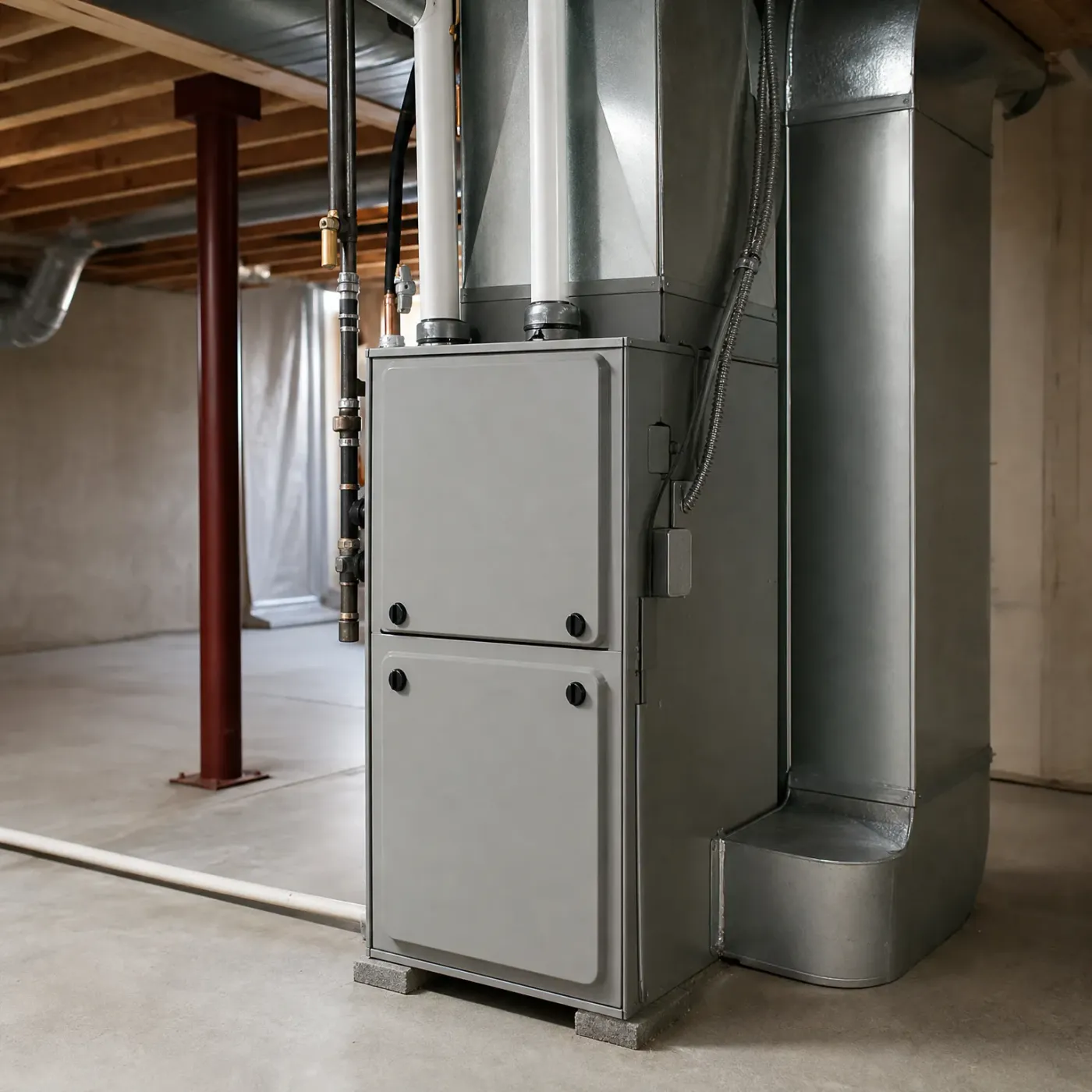
A gray high-efficiency furnace with two access panels stands on blocks in a basement, connected to sheet-metal ductwork, PVC vent pipes, flexible conduit, and gas and water piping, beside a red support column and exposed wood joists.

Skip calling around

Only one pro gets your request, so you hear from one company.

Answer a few questions instead of calling shop after shop.

Fill out one form

You're not committing to anything by asking.

Clogged Line or Cracked Part

Clogged Condensate Line

  • Algae or sediment builds up inside the PVC line over time and slows the water until it backs up into the cabinet.
  • If the line runs to a floor drain, check whether that drain itself is blocked before assuming the furnace is at fault.
  • A condensate pump that's stuck or unplugged will let water collect until it overflows the trap.
  • This usually shows up as a small, steady drip rather than a sudden puddle.
  • A contractor can clear the line and test the pump so it drains the way it's supposed to.

Cracked Heat Exchanger or Trap

  • A hairline crack in the secondary heat exchanger lets water escape where the metal was never meant to hold it.
  • The condensate trap itself can crack from age or from freezing if it sits near an unconditioned space.
  • Water from a cracked part tends to show up even when the drain line is completely clear.
  • This isn't something to patch, since the part has to come out and get replaced.
  • A licensed tech who works on these furnaces regularly will know to check the exchanger before anything else once the trap and line check out fine.
A beige high-efficiency furnace stands on a concrete basement floor beside sheet-metal ductwork, with white PVC vent pipes and a gas line running along an insulated wood-framed wall.

Normal Operation

The flue pipes, drain line and gas valve all connect the way they should, and nothing sits under the cabinet but dry concrete. Water leaves through the condensate line on its own, out of sight, and the furnace runs without anyone needing to check on it.

An older metal furnace with a louvered front panel stands against a concrete basement wall, connected to sheet-metal ductwork and a flue pipe, with copper and steel pipes running alongside.

Something Has Failed

Dust has settled on a cabinet that has sat too long without a look inside. A clogged trap, a cracked heat exchanger or a failed condensate pump will all put water where it doesn't belong. A tech who works on these every winter can tell you which one it is.

What are you seeing under your own furnace right now

Go look at what's actually there. A small puddle that shows up again a day after you wipe it could just be a clogged trap or a drain line that needs clearing. Water spreading out from the cabinet, rust forming on the base, or a musty smell in the furnace closet points to something that's been dripping for a while. If the water has reached the burner compartment or the electrical connections inside, the furnace may shut itself off or trip a float switch meant to protect it. Left alone, standing water under a gas furnace can rust out the cabinet floor or reach components it shouldn't touch. None of that means tear it apart yourself. It means someone needs to see where the water is actually coming from.

A gray high-efficiency furnace with white PVC vent pipes stands on a concrete pad in a basement, beside sheet-metal ductwork, copper piping and a poured concrete wall with wood framing at left.
A newer high-efficiency furnace venting condensate through its PVC line while gas lines and plumbing run clean behind it.
A beige gas furnace in a basement with a metal flue pipe, galvanized sheet-metal ductwork to its left, and gas and water pipes along the concrete wall to its right.
An older furnace with a metal flue pipe has no condensate to manage, so water on the floor here points to something else.
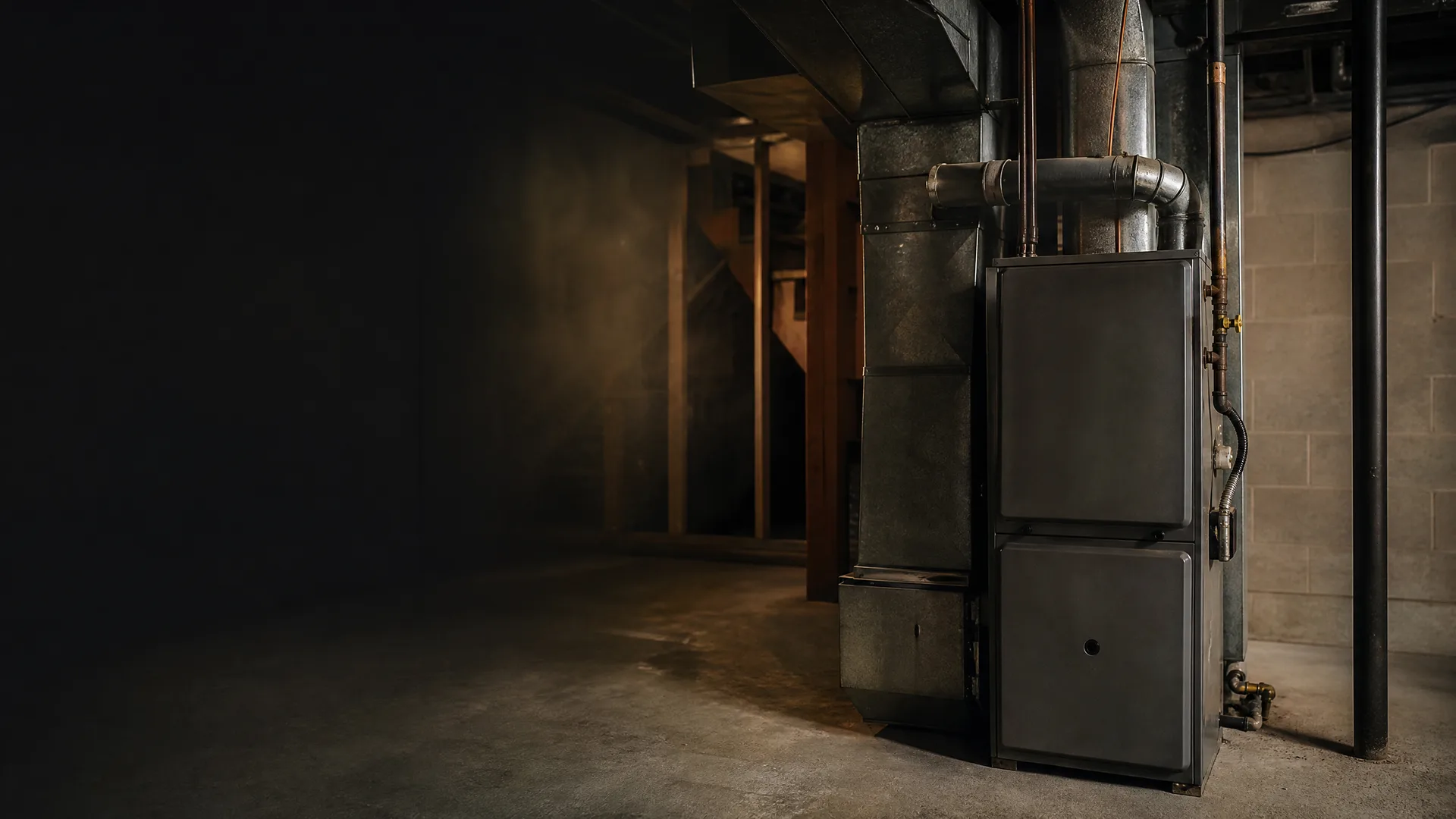
A furnace with sheet-metal ductwork and copper piping stands against a concrete block wall in a dim basement with a bare concrete floor.

The basement is cold by six on a November evening, the furnace dark between cycles. You crouch down with a flashlight and see it: a thin line of water tracking from under the cabinet toward the floor drain, a little haze of dust still hanging where the blower kicked off a minute ago. The concrete around the drain is damp, not flooded, just enough to leave a dark ring when you touch a paper towel to it. Outside it's already near freezing. You think about calling someone tomorrow, then wonder if you should just shut the furnace off tonight and sleep under another blanket instead.

Winter nights average 21°F statewide

Winter nights here average 21°F, so your furnace is running long cycles most of the night to keep up. A high-efficiency furnace makes more condensate the harder and longer it runs, which means more water moving through that drain line and more chances for a clog to show up.

NOAA nClimDiv 1991-2020 county normals weighted by homes

A puddle under your furnace almost always comes down to the condensate system or something it's exposing, and now you know which signs point where. What matters next is getting someone to look at the trap, the line, and the heat exchanger before a small leak turns into rust through a cabinet or a cracked exchanger. A furnace tech who works winters in Utah sees this same leak pattern on high-efficiency units over and over, clogged traps, sagging PVC lines, pumps that quit, and knows which one to check first instead of guessing. Requesting a repair here puts you in touch with one licensed local contractor, not a handful of companies calling you back at once, so you're not stuck explaining the same puddle five times to five different people. You tell them what you saw under the cabinet, and they come knowing what that usually means on this type of furnace.

Kitchen corner with cream upper cabinets, oak lower cabinets, white marble-look countertop, beige tile backsplash, a ceramic vase of greenery, a wooden cutting board and bowl, and a black-framed window at right.
Interior corner of a room with a white-framed window and wide sill, beige walls with panel molding, a wooden cabinet holding a ceramic vase with a green leafy plant, and blurred shrubs and trees outside.
A wood-framed armchair with beige cushions and a woven lumbar pillow sits in a corner beside a large window overlooking green trees, with a tall ceramic vase holding leafy branches on the left and plaster walls and wood flooring.
Interior corner with a white-framed window above a sill, beige walls with baseboard molding, a greige shaker-style cabinet with brass knobs and a potted plant on top, light wood flooring and a woven jute rug.
A dark-framed six-pane window with white trim and sill set in gray horizontal lap siding, with hydrangea shrubs below and a white column and shingled roof section at left.

Describe it once

Your request stays with one local pro.

Skip the search

It costs nothing to send, and you don't have to hire anyone.