A dark gray furnace with two access panels stands in a basement, connected to galvanized sheet-metal ductwork and PVC pipes, with exposed wood framing and a bare bulb light in the background.

Skip calling around

Why one room stays cold in a Utah winter

One room runs cold while the rest of the house is fine, and that usually points to something specific: a duct run losing heat, a register closed off somewhere, or a furnace that can't push air far enough to that corner. This page walks through what's behind it. Rather than calling around and explaining the problem to one contractor after another, you get a local one who works on Utah furnaces all winter and already knows where to look.

Start one form

A cold room while the rest of the house is warm almost always comes down to the duct run that feeds it. That duct may lose heat before the air gets there, especially if it runs through a garage, attic, or crawlspace where it isn't wrapped well. It can also mean the register is partly closed, a duct joint has come loose, or that room sits at the far end of the system, past the point where your furnace can still push warm air with any force. In a lot of Utah homes, the room over a garage or at the end of a long duct run is the one that loses the fight. None of these are things you fix by turning the thermostat up, since the rest of the house will just run hotter while that one room stays the same. It points to a problem in the ductwork or airflow itself, not the furnace's output, and that's a repair job, not a settings change.

A woman with shoulder-length brown hair wearing a beige knit cardigan sits in a gray upholstered armchair near a window, looking off to the side with a slight smile, with bookshelves blurred in the background.
A woman and a sleeping child wrapped together in a cream knitted blanket on a couch, with a potted plant, framed photo and lit lamp in the background.

The duct feeding that room is doing more work than the others. Every foot it travels through a garage, attic, or crawlspace bleeds a little heat before the air reaches the vent, so a long run can arrive noticeably cooler than one that stays inside conditioned space. The furnace itself is only part of the story. It's built to handle the whole house, but once the air splits off into branches, the room at the end of the longest one gets whatever pressure is left after the closer rooms take their share. Somewhere near that split there's often a damper, a small lever or screw inside the ductwork, and if it's turned even partway closed, that room loses airflow on purpose, whether anyone meant it to or not. Shutting vents elsewhere to force more heat down that branch tends to backfire, since it changes the pressure in the whole system rather than just redirecting it. And if the return vent sits far from that room, the air cools before it ever gets pulled back to the furnace to be heated again.

What's Different About That Room

  • A long duct run loses more heat than a short one, since the air has more surface area to cool against on the way.
  • A furnace sized right for the house still has to push air through every branch, and the farthest room gets whatever pressure is left.
  • A damper inside the duct, often near where it splits off the main trunk, can be turned to send less air down that branch.
  • Closing registers in other rooms to push heat to a cold one usually backfires, since it raises pressure and can make the blower work harder than it should.
  • A return vent too far from that room means the air in it never gets pulled back to the furnace to be reheated.
  • Insulation around a duct in an unheated space keeps the air closer to the temperature it left the furnace at.
A man with grey hair and stubble in a dark sweater sits on a grey sofa indoors, looking off to the side, with a potted plant and a sunlit window behind him.
A man with gray hair, a beard and glasses, wearing a dark green sweater, sits on a gray sofa in a sunlit living room with a potted plant, table lamp and wooden sideboard behind him.
A middle-aged man with graying hair and a short beard sits on a blue sofa in a living room, looking toward a window, with a bookshelf, lamp and framed picture in the background.
A man with graying curly hair and a dark green sweater sits on a gray sofa in a sunlit living room, looking off to the side, with a framed picture, shelving, an armchair and a window with sheer curtains behind him.

Why the duct run matters most

A duct that runs through an attic or crawlspace in Utah is sitting next to outside air most of the winter. Insulation around that duct slows the heat loss, but it doesn't stop it, and a thin or torn wrap loses more as the air travels. By the time warm air reaches the last register on that run, it has given up some of its heat to everything around the duct. The room closest to the furnace never has this problem. The one at the far end of a long, poorly wrapped run does, and it will keep doing it every winter until the duct itself is addressed.

What a tech checks first

A furnace tech working in Utah sees this pattern often enough to know where to look before touching the thermostat. They check the register itself, since a damper half closed from the last homeowner or a previous repair cuts flow to that room without anyone noticing. They check the duct run for gaps at the joints and thin spots in the wrap. They check whether the furnace's blower setting is matched to the house, since a setting too low leaves the far rooms underserved even when the near ones feel fine. Finding which of these it is takes someone who has traced this exact problem through a Utah attic before.

An older gas furnace with two louvered front panels stands on a concrete basement floor beside galvanized sheet-metal ductwork, pipes, and a weathered concrete wall.
Before you get your furnace repair
A gray high-efficiency furnace in a basement, connected to sheet-metal ductwork on the left and white PVC vent pipes above, with black gas and drain piping and an exposed wood-stud wall with OSB sheathing on the right.
After you get your furnace repair

Describe it once

Your request goes to one pro, not a list of companies.

No fee to send it, and nothing to sign.

What you're likely doing now

You keep a space heater in that room, or you've shut the vents in other rooms trying to push more air down the hall. Neither one fixes the duct run or the register behind the problem. The space heater runs on your power, and while power here is cheap, you're paying for it every day that room stays cold. Meanwhile the rest of the house may be getting warmer than it needs to be, since the furnace keeps running to satisfy the thermostat while that one room never catches up.


What gets fixed and what doesn't

A contractor who works on furnaces around here every winter can find whether that room's problem is a duct losing heat, a closed register, or a furnace that can't push air that far, and repair the actual cause instead of the room just staying cold. You call once, explain the problem once, and someone local who already knows what tends to fail in Utah homes comes out to look at it. No comparing quotes from three companies or fielding calls from everyone you contacted.

Winter nights average 21°F statewide

At 21°F on an average winter night, any heat that duct loses before it reaches that room is gone for good. The air coming out of the register has already given up warmth to the attic or crawlspace it passed through, so that room ends up with less to start with.

NOAA nClimDiv 1991-2020 county normals weighted by homes

A beige residential gas furnace with white PVC vent pipes, copper and yellow gas lines, and adjacent sheet-metal ductwork stands on a concrete floor beside a plain white wall.

A room near the furnace

A room close to the furnace and on a short duct run usually gets full heat. The air hasn't had far to go, so it hasn't lost much warmth along the way. If every register in that room is open and the door isn't kept shut most of the day, there's little standing between it and the rest of the house temperature-wise. A contractor checking the system would likely find that run in good shape, wrapped well, with no obvious damage.

A gray high-efficiency furnace with white PVC vent pipes and metal ductwork stands on a concrete floor beside a plain off-white wall in a basement.

A room at the far end

A room at the end of a long run, or over a garage, or past a crawlspace, is a different case. The air has given up heat before it arrives, and the furnace has less pressure left to push it there anyway. Closing registers elsewhere doesn't solve that, and neither does turning up the thermostat for the whole house. A technician who works on these systems in Utah every winter can trace that run and find where the heat is actually going.

Fix the Duct or Live With the Cold Room

Fix the duct run

  • A contractor who works on Utah furnaces every winter knows which attic and crawlspace runs lose heat fastest and checks those first.
  • Sealing and wrapping a bare or torn section stops the air from giving up warmth before it reaches the register.
  • A damper that's closed or barely open can be found and adjusted in the same visit, which a space heater can't fix.
  • Once the run is sealed and balanced, that room draws off the same gas furnace as the rest of the house, so there's no separate cost to run it.
  • A licensed contractor can tell you whether the fix is the duct itself or something further back, like airflow the furnace can't push that far.
  • This is one visit with one contractor, not a string of calls to different companies to figure out who even handles ductwork.

Keep living with it

  • A space heater in that room runs on your power all winter, separate from the gas bill the rest of the house is already paying.
  • Shutting vents in other rooms to push more air down the hall throws off the balance the whole system depends on and doesn't reach the cold room anyway.
  • The duct keeps losing heat through the same attic or crawlspace every night, so the room stays behind no matter how long the furnace runs.
  • Without someone checking the actual run, you're guessing between a duct problem, a closed damper, and a furnace that can't reach that far.
  • Every winter the same room runs cold, and nothing about the duct or register changes on its own.
  • Space heaters left running in a closed room are a real fire risk, which is part of why they're a stopgap and not a fix.
A gray high-efficiency furnace with white PVC vent pipes stands against a concrete basement wall beside sheet-metal ductwork, a small condensate pump on the floor, and exposed wood framing at left.
A furnace that's heating evenly has no trouble sending air to every branch of the duct system, cold room included.
A gray sheet-metal furnace with flue pipe and adjacent ductwork stands against a stone basement wall on a concrete floor, with white PVC and metal pipes running nearby.
A furnace working harder than it should, in an old stone-and-block mechanical room, may not have the push left for the farthest room.
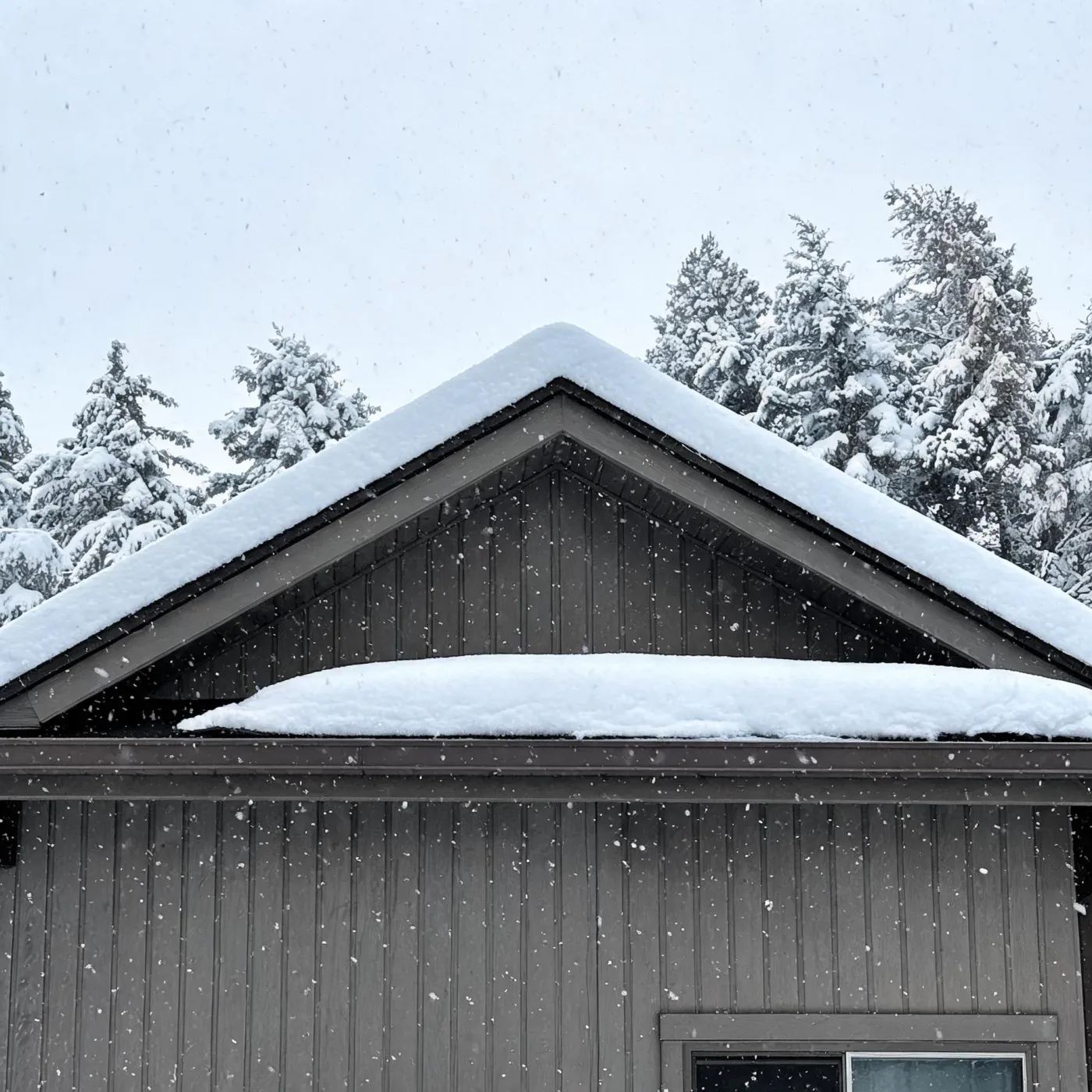
Snow-covered gable roof of a dark brown vertical board-and-batten house during falling snow, with snow-laden conifers behind it under a pale gray sky.

Statewide, winter nights average 21°F, according to NOAA climate data. Your furnace isn't just fighting that cold once, it's fighting it for hours on end, every night, all winter. The room closest to it can usually keep up. The room at the end of a long duct run can't, because the air reaching it has already lost warmth to the attic or crawlspace along the way. On the coldest nights that gap shows up fastest. You'll notice it as a room that never quite gets comfortable no matter how long the furnace runs, while the thermostat reads fine for the rest of the house.

NOAA nClimDiv 1991-2020 county normals weighted by homes

A closed laptop and a cream mug of coffee on a coaster sit on a dark wooden table, with a potted plant at left and a kitchen counter, tiled backsplash and shelf of ceramics in the background.

One room cold, one answer

A duct run losing heat along the way, a register that's closed or blocked, or a furnace without enough push left for the farthest branch. That's what's behind a cold room while the rest of the house stays warm, and it's rarely anything more mysterious than that. A space heater or shut vents down the hall get you through a night. They don't fix the duct, the register, or the furnace behind it.

Finding out which one it is in your house means someone looking at your attic, your crawlspace, and your furnace itself. You don't have to track that person down yourself, call around to a handful of companies, explain the cold room over and over, and sort through quotes that don't tell you much until someone's actually seen the duct run. One contractor, local, who works on Utah furnaces all winter and knows which runs lose heat first, takes a look and tells you what's actually wrong.

A living room corner with a beige upholstered armchair holding navy and striped cushions, a small round wooden side table with a carved bowl and a potted green plant, a framed landscape picture on a pale wall, built-in shelving, and a curtained window.
A gray high-efficiency furnace with two access panels stands on a concrete basement floor, connected to sheet-metal ductwork and white PVC vent pipes, with wood framing and a gas line nearby.

No phone calls to make

Step 1 of 3: Equipment