Profile view of a bearded man wearing a dark baseball cap and a dark gray T-shirt against a plain off-white background.

Signs your furnace won't last a Utah winter

Step 1 of 3: Equipment

A furnace that won't make it through a Utah winter usually tells you before it quits. Watch for a burner flame that's yellow or orange instead of steady blue, short cycling where it kicks on and off every few minutes, a blower that runs but barely pushes warm air, or rooms that stay cold no matter how high you set the thermostat. Rattling, a burning smell, or the furnace running nonstop once nights drop into the 20s and teens are warning signs too. These point to a cracked heat exchanger, a failing igniter, a clogged burner, or a blower motor on its way out. Any one of these gets worse under the load a long Utah winter puts on the system, since the furnace runs for hours at a stretch from November through February. Catching it now means the difference between a repair and being without heat on the coldest night of the year.

A gray high-efficiency furnace stands on a concrete basement floor beside galvanized sheet-metal ductwork, white PVC vent pipes, copper and black piping, and unfinished wood stud framing.
Running fine: flame burns blue and steady, the blower holds a strong air flow, and cycles last as long as the thermostat calls for.
A gray furnace with two access panels stands on a concrete basement floor beside sheet-metal ductwork, with pipes, flexible conduit and an electrical box on the concrete wall to the left.
In trouble: a cracked heat exchanger, a failing igniter, or a blower that can't keep up when it's single digits outside.

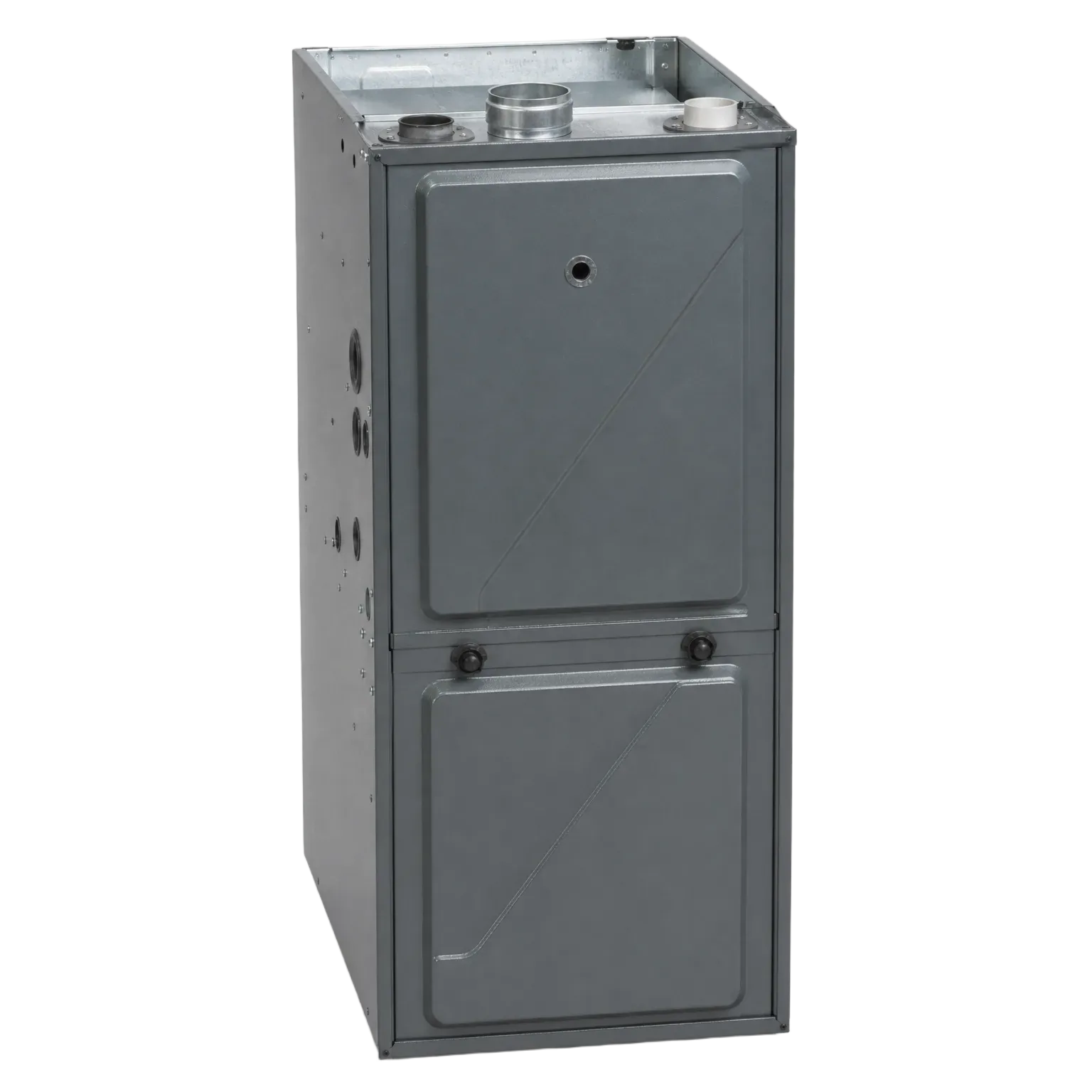
A furnace doesn't just stop. It goes through a sequence every time it starts, and the signs show up at whichever step is weakest. The inducer motor has to clear exhaust from the heat exchanger before the gas valve opens. If that motor is tired, ignition gets delayed or skipped. Once gas lights, the flame sensor checks that it actually caught, and cuts it off fast if not, which is why a failing sensor can mean the burner shuts off right after starting. An igniter that glows dim or needs a few tries is on its way out, not just having an off day. None of these are related, so they don't fail together. One part goes this year, another in a year or two, which is how a furnace that's run fine for a decade starts acting up piece by piece. A heat exchanger that's cracked is the one that matters most, since it lets exhaust mix into the air your blower is pushing through the house. A blower wheel packed with dust will move less air at the same motor speed, so the house heats slower without any part actually breaking.

How a furnace actually fails

  • A cracked heat exchanger lets exhaust mix into the air your blower pushes through the house.
  • The flame sensor reads whether a flame is present and shuts off gas within seconds if it isn't.
  • An igniter that glows weak or takes several tries to catch is close to failing outright.
  • The inducer motor has to clear exhaust out before the gas valve is allowed to open at all.
  • A blower wheel caked with dust moves less air even though the motor still runs at full speed.
  • Furnaces built to last twenty years or more start losing these parts one at a time, not all together.
A woman and a child wrapped together in a knitted gray blanket on a couch, with the child's head resting on her shoulder and a lit table lamp and houseplant in the background.
A smiling older woman with gray hair in a cream knit sweater stands in a dimly lit kitchen beside a window showing snow outside, with a round loaf of bread on the counter in the foreground.

Explain it one time

Only one pro gets your request, so you hear from one company.

You only hire the pro if you want to.

A gray high-efficiency furnace with white PVC vent pipes stands beside sheet-metal ductwork and a water heater in an unfinished basement with concrete walls and wood framing.

Furnace holding up fine

This is what a furnace in good shape looks like: sheet-metal ductwork tight at the seams, PVC flue pipe running clean to the outside, and a cabinet free of rust or soot. A furnace set up like this will see you through single-digit nights without a second thought.

A beige gas furnace with a metal flue pipe stands in a basement against concrete block walls, beside sheet-metal ductwork, copper and white plastic pipes, and a water heater at right.

Furnace on its way out

Galvanized ductwork like this has usually been in place a long time, and so has the furnace under it. If the blower struggles to push air through the return plenum or the burner sounds rough on startup, winter is when that catches up with you.

A closed silver laptop and a glazed ceramic mug on a wooden table, with a blurred kitchen counter, potted plant, cutting board and window in the background.

What a failing furnace costs your household

If your furnace is struggling, you'll feel it in the rooms farthest from it first. A bedroom that won't hold heat on a cold night, a thermostat that says 68 while the house feels colder, a furnace that runs almost constantly without catching up. That's the blower working harder for less result, and it shows up on your gas bill before you ever see a repair truck.

The bigger risk is what happens if it quits outright during a cold snap, with people at home who need the heat to stay on. Instead of searching for a contractor at that point, calling around to see who can come out, and explaining the same problem to three different companies, you can get matched with one licensed Utah contractor who works on furnaces like yours all winter and knows what tends to fail first in this cold.

A dark ceramic mug on a round wooden table beside a light grey sofa with a woven cushion and knit throw, with a window, potted plant, floor lamp and wooden cabinet blurred in the background.

Winter nights average 21°F statewide

At 21°F overnight, a furnace that short cycles or won't hold a steady blue flame doesn't get much recovery time between calls for heat. It has to catch fast and run clean for hours at a stretch, and a weak igniter or a cracked heat exchanger won't hold up to that for long.

NOAA nClimDiv 1991-2020 county normals weighted by homes

Where your furnace stands now

  • A blue, steady flame and a blower with real force behind it mean your furnace is set up to handle single-digit nights.
  • A yellow flame, short cycling, or a weak igniter are signs worth having checked before the cold settles in for good.
  • A cracked heat exchanger or a flue pipe that isn't running clean to the outside isn't something to wait on.
  • Rooms that won't hold heat or a thermostat reading that doesn't match how the house feels point to a furnace already falling behind.
  • A local contractor who services furnaces all winter in this climate knows which of these problems show up first and which ones to watch.
  • Sending the job to one licensed contractor means one visit and one assessment, not a string of calls to sort through.

A furnace that's going to make it through winter here shows you with a steady blue flame, a blower that moves real air, and cycles that run their course without kicking off early. One that won't make it usually says so first in small ways: a flame that leans yellow, an igniter that takes a few tries to catch, a cycle that cuts short and starts again a few minutes later. None of that fixes itself once the cold sets in for good.

A cracked heat exchanger or a flue pipe that isn't venting clean to the outside is a different kind of problem. That's not a comfort issue, and it's not something to leave for next month. Rooms that stay cold no matter what the thermostat says are the furnace telling you it's already behind, before the hardest nights even get here.

Getting someone out to look at it doesn't have to mean calling around town, explaining the same thing three times, and weighing bids from strangers. A contractor who works on furnaces all winter in this climate has seen these exact problems before, usually more than once a season, and knows which ones to check first. One licensed contractor means one visit, one answer, and no string of follow-up calls to sort through on top of a furnace that's already struggling. That's the part that's worth handing off, even if the fix itself takes some doing.


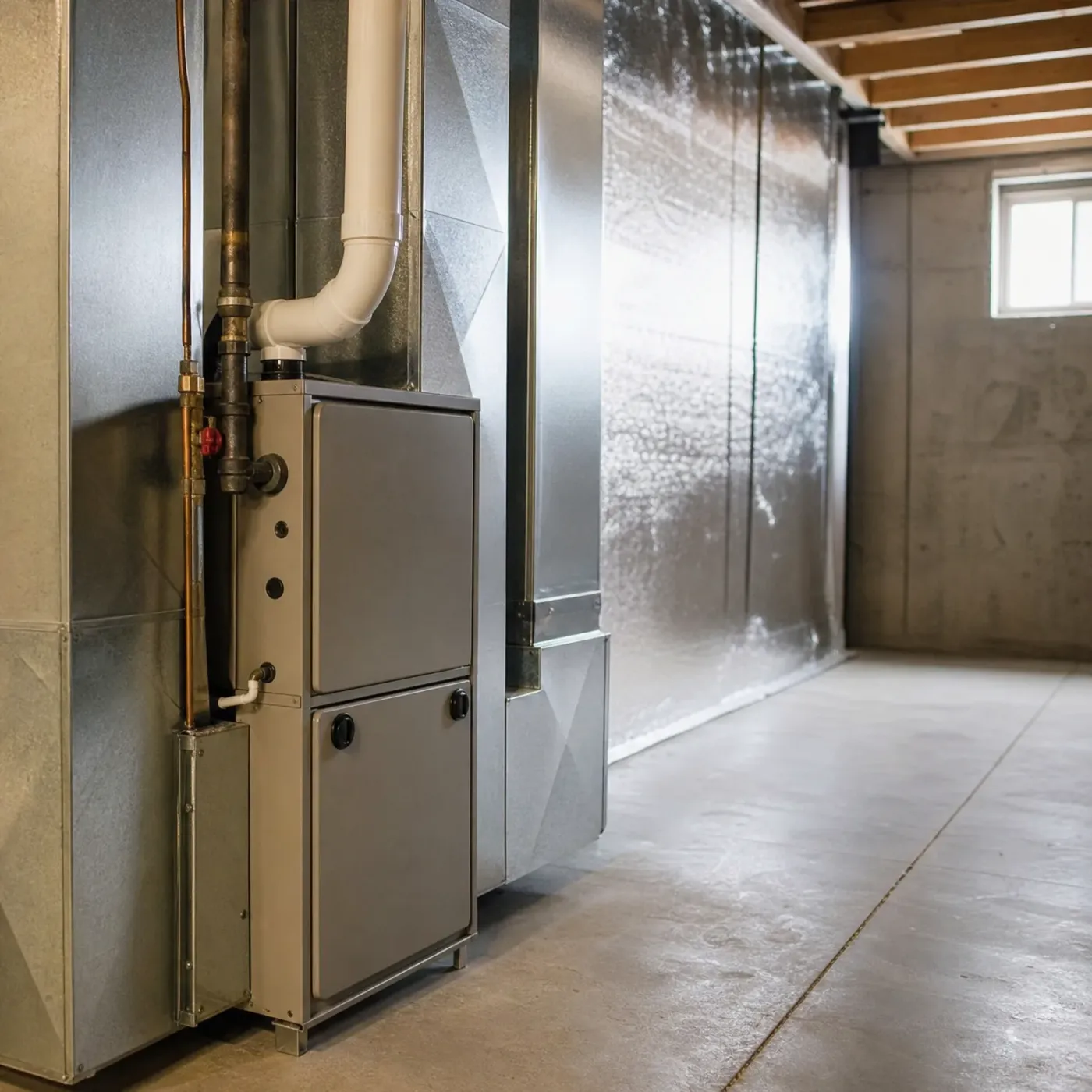
A gray furnace with a white PVC vent pipe and copper piping stands beside large galvanized sheet-metal ducts in an unfinished basement with concrete floor, concrete walls, foil-faced insulation, and a small window.

Skip the calls to every shop

Find a local pro

Your request stays with one local pro.

Asking costs nothing, and the choice to hire stays yours.