





Is a high-efficiency gas furnace worth it in Utah

A local installer who puts in furnaces gets your project.

Connect with a pro

A high-efficiency furnace is worth it for most Utah homes, because gas heat is what nearly every house here runs on and that furnace runs for months at a stretch through winter. The gain comes from venting. A standard furnace sends a good share of the heat it makes straight out the flue. A high-efficiency model pulls more of that heat back out of the exhaust before it leaves, often using a second heat exchanger, so less gas buys the same warm house. Power here is cheap enough that it doesn't change this math much either way. What changes it is how long your furnace runs and how old the one you have is. A furnace that's reached the end of its life is the point to weigh this, since the cost difference shows up mainly at install, not after. If yours still runs fine, there's no reason to swap it early just for the rating.

An older man with gray hair and a beard, wearing a dark coat dusted with snow, stands smiling in a doorway of a warmly lit home with a sofa, lamp and window visible behind him.
An older man with grey hair and a beard, wearing a dark coat dusted with snow, stands in a dimly lit entryway with a ceiling lamp, a side table with two shaded lamps, and a lit fireplace visible in a room beyond.
A bearded older man in a dark snow-dusted coat and scarf stands just inside a home's front door, with a lamp-lit room and snowy window visible behind him.
An older man with gray hair and a beard stands in a doorway of a home, wearing a dark coat dusted with snow, with a lit fireplace and lamp visible in the blurred room behind him.

What's your furnace telling you about winter ahead

Check your furnace room. If it vents through a metal flue up through the roof, you're running a standard furnace, and that flue is doing real work venting hot exhaust air straight out of your house. A high-efficiency furnace vents through PVC pipe out a side wall instead, low to the ground, because the exhaust is cool enough by the time it leaves. If your gas bills climb hard every January and February, that flue is part of why. An older standard furnace also means an older heat exchanger, and a cracked one can let exhaust gases leak into your ductwork instead of out the flue. That's not a reason to panic, but it's a reason to have someone look at it before the cold months, not during them.

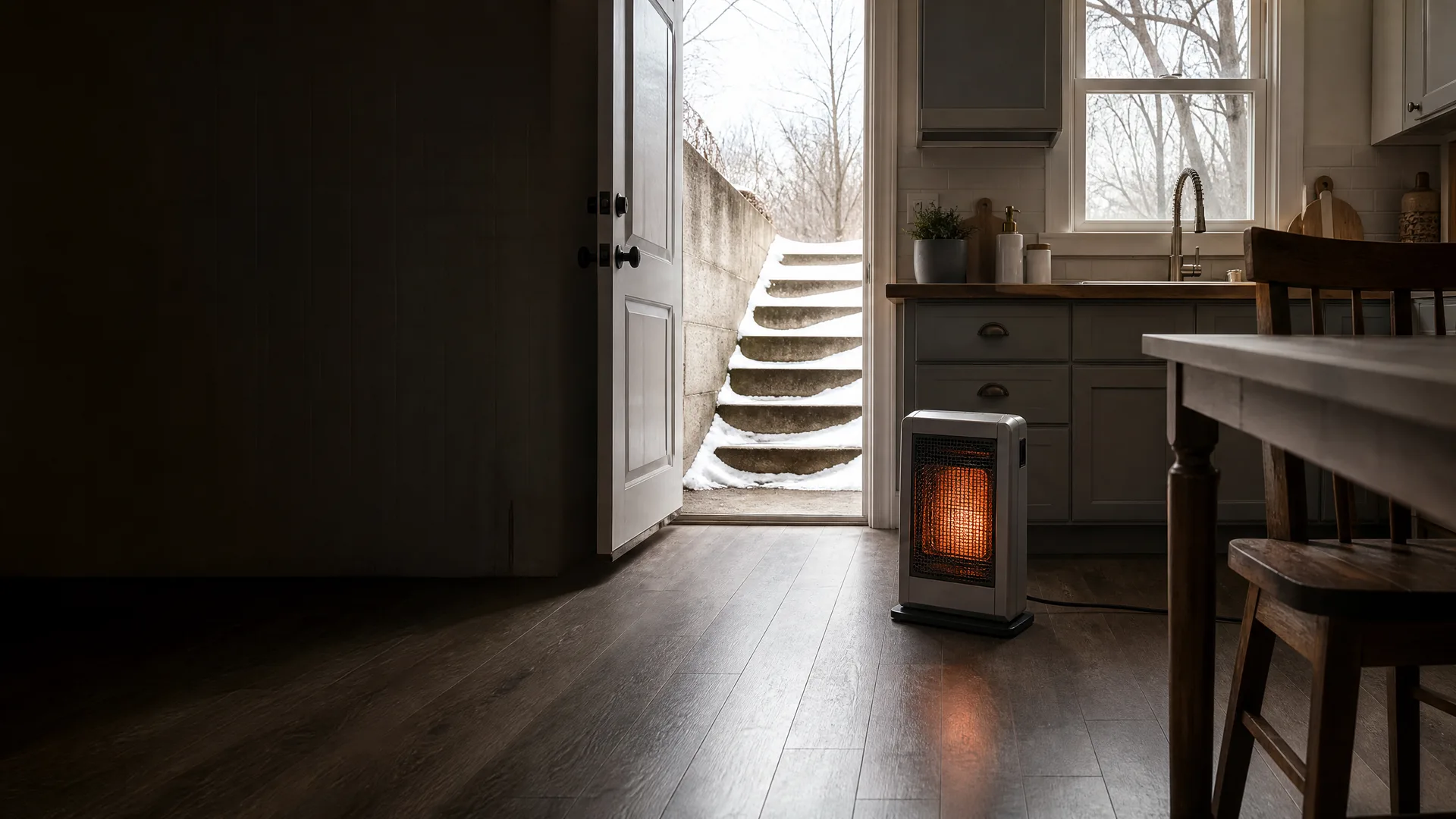
A portable electric space heater with glowing orange elements sits on a dark wood floor near an open exterior door that reveals snow-dusted concrete steps, with a kitchen counter, sink, window and wooden table to the right.

You're at the kitchen table with coffee, still in your coat because the house hasn't caught up yet. The space heater's humming by your feet, orange coil throwing the only real warmth in the room. Behind you the basement door sits open, the way you left it after going down to check on the furnace again. Outside it's still dark enough to be cold through the window glass. You can hear the furnace trying, that low rattle and catch, but the air coming up through the vents feels thin. Another morning starting this way, heater plugged in, coffee going cold faster than it should, waiting to see if the house warms up before you have to leave.

Standard Furnace vs High-Efficiency

Standard furnace

  • It's about 80% efficient, so for every dollar of gas it burns, roughly 20 cents goes out the flue instead of into your house.
  • It vents through a metal flue straight up through the roof, which is why that exhaust runs hot enough to need metal pipe.
  • It has one blower speed, so it either blasts heat and shuts off or sits idle, which is part of why rooms far from the furnace run cold.
  • Parts for it are common and most furnace techs in Utah have replaced them for years.
  • The up-front cost to install one is lower than a high-efficiency unit.
  • It still needs a flame and a gas line sized the same as before, so nothing else in the furnace room has to change.

High-efficiency furnace

  • It runs at 90% to 98% efficiency, pulling more heat out of the same gas before venting what's left.
  • It vents through PVC pipe out the side of the house, because the exhaust is cool enough by the time it leaves the second heat exchanger.
  • Many models run a variable-speed blower, moving air at a lower speed for longer instead of one hot blast and an idle period.
  • PVC venting means no metal flue running up through the roof, which changes what the installer has to route and where.
  • It costs more to install than a standard furnace, and that gap is the trade-off against the gas it saves over the winters it runs.
  • It needs a condensate drain for the water the second heat exchanger pulls out of the exhaust, which a standard furnace never has to handle.
A beige high-efficiency furnace in an unfinished basement, with white PVC vent pipes, a yellow gas line, metal ductwork, and exposed wood framing on a concrete floor.

High-efficiency, properly vented

This is what a high-efficiency furnace looks like installed. The PVC pipes to the side carry intake air in and exhaust out, run through the wall instead of up a metal flue. That exhaust is cool enough for plastic pipe because the furnace pulled almost all the heat out of it before it left. The gas line and wiring are tucked along the wall, clear of the ductwork above.


An older beige furnace with two louvered vent panels stands on a concrete basement floor, connected to galvanized ductwork and a metal flue pipe, with gas piping and flexible conduit on the wall behind.

Standard furnace, aging out

An older furnace like this one still runs on black iron gas pipe and a round metal flue, the setup nearly every Utah home had before high-efficiency models came along. The flue carries hot exhaust straight up through the roof, and with it, heat the furnace never gets the chance to use. Nothing here is broken. It just was never built to keep that heat in the house.

A woman wrapped in a thick cream knit blanket sits in an armchair beside a lit table lamp, with an open book in the foreground and a frost-covered window behind her.
A bearded man in a plaid flannel shirt stands indoors looking out a frost-covered window, with a steaming dark blue mug on the wooden sill and snow-covered trees outside.

A pro who works on furnaces

You've already seen what separates the two furnaces and what yours is telling you about its flue. The question left is whether swapping it makes sense for your house, and that depends on things only someone standing in your furnace room can see: how it's vented now, what a new vent run would take, whether the space fits a different unit. Figuring that out yourself means calling around Utah for furnace installers, explaining your setup to each one, then sitting with quotes that aren't built the same way and trying to compare them anyway. That's the part worth handing off. Winter here doesn't give a furnace much of a break, and a furnace that's losing heat out the flue is doing that every day it runs from now through spring. The sooner someone qualified looks at your setup, the sooner you know what a change would actually cost you and get you back, instead of guessing from a chart.

  1. Burner ignites and the primary heat exchanger warms first

  2. Flue gas still holds enough heat to pull further

  3. A second heat exchanger pulls out the leftover heat

  4. Flue gas cools enough to condense into water

A gray high-efficiency furnace in a basement, connected to sheet-metal ductwork on the left and white PVC vent pipes above, with black gas and drain piping and an exposed wood-stud wall with OSB sheathing on the right.
A high-efficiency furnace installed like this one vents through PVC pipe in the wall, and the ductwork and gas line hookups are the same work either way.
An older gas furnace with two louvered front panels stands on a concrete basement floor beside galvanized sheet-metal ductwork, pipes, and a weathered concrete wall.
An older standard furnace like this one vents through metal flue, and moisture staining on concrete walls nearby is worth asking a contractor about before you decide.
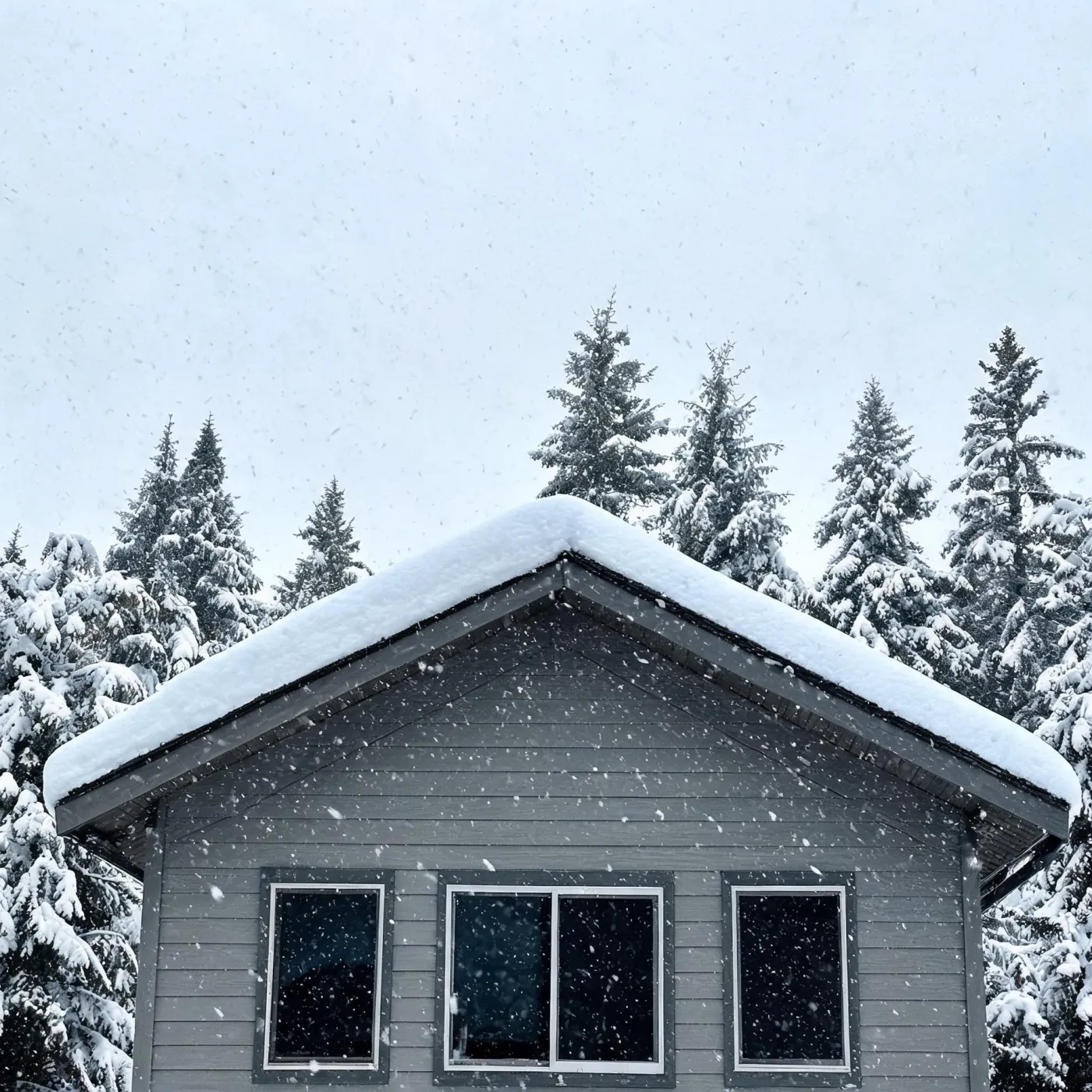
Gable end of a gray horizontal-siding house with three dark windows, its roof covered in thick snow, surrounded by snow-laden conifers under a pale sky with falling snowflakes.

Winter nights average 21°F across Utah, according to NOAA climate data. That's below freezing for a good stretch of the night, which means your furnace isn't cycling on and off a few times, it's running long stretches to keep up. A standard furnace venting hot exhaust out the roof is losing heat the whole time it works that hard. On a night that cold, you'd notice it most near the floors and in rooms farthest from the furnace, the ones that take longest to warm back up once the burner shuts off.

NOAA nClimDiv 1991-2020 county normals weighted by homes

A woman stands in the open black front door of a white-sided house with a dark shingled roof while a man in a navy jacket approaches along the walkway, with lantern wall lights, a potted shrub, and flowering garden beds nearby.

So is it worth it

For most houses in Utah, yes. Gas is what heats this state, winters here ask a lot of a furnace, and a high-efficiency model keeps more of what you're paying for inside the house instead of venting it out the roof. A standard furnace isn't broken for doing that. It was built before the second heat exchanger existed. But you now know what the difference looks like in your own furnace room, down to the pipe.

What you don't know yet is what it looks like in your house specifically, the venting path, the flue run, whatever else is down there that only shows up in person. That's the part worth getting an answer on before you decide anything. Submitting your information connects you with a contractor who handles installs like this in your area, and they'll reach out to look at your setup and tell you what it would actually take. No need to track down who's available or sit on hold explaining the same thing twice.

A wooden table holding a stone vase with a bare branch, two stacked books and a small dark bowl, beside a window with green foliage outside and a sofa in the dim background.
A single-story stucco house at dusk with a lit paver walkway lined by low path lights, desert plants and boulders in front, and distant mountains under an orange and blue sky.

Furnace Installation

Get your furnace to the right pro

Step 1 of 3: Equipment
  • A corner of a room with an upholstered wood-framed armchair holding a floral pillow, a round side table with a ceramic lamp, books and a vase of greenery, a framed landscape painting on the wall, a patterned rug, and a sunlit multi-pane window.
    • Say what's going on with your furnace, and a pro who works on them reaches out.
    • A local pro who knows furnaces gets your details and gets in touch.
  • Interior corner with a wood-framed window showing green foliage outside, a framed landscape print on a beige wall, and a rounded stone vase of leafy branches on a wooden cabinet.
    • One request and the search for a pro is handled.
    • Send it once and finding someone is no longer on you.
  • A pale ceramic vase holding olive branches sits on a dark wooden countertop beside a carved wooden dough bowl, next to a wood-framed window and a light painted plank wall.
    • Skip collecting and comparing quotes for the new furnace.
    • Explain the job once and skip repeating it on every call.
  • A dark wood round side table holding a brass lamp with a cream shade, a blue-and-white patterned bowl, and a white textured pot of greenery, beside an upholstered chair with a gray patterned cushion and a white-framed window showing green trees and flowering shrubs.
    • One installer gets your project, so there's no bidding war over it.
    • Your request goes to one pro, not a list of companies.