

How long a furnace lasts in Utah

Send the form and the search for an installer is over.

Let a pro reach out

A gas furnace in Utah lasts 15 to 20 years. That range holds here because most homes run on gas heat and the furnace only has to work hard part of the year, not fighting cooling loads all summer the way equipment does in muggy climates. What shortens a furnace's life is usually not age by itself but a cracked heat exchanger, a failing igniter, or a blower motor that has to strain because the ductwork or filter restricts airflow. If your furnace came with the house, check the age on the data plate inside the access panel. Past 15 years, repairs start costing more as parts get harder to find, and a furnace that short-cycles or runs longer to hit the same temperature is telling you it's nearing the end. Planning for replacement before a midwinter breakdown forces the decision is worth doing once a furnace crosses that mark.

A gray high-efficiency furnace with white PVC vent pipes stands beside sheet-metal ductwork and a water heater in an unfinished basement with concrete walls and wood framing.

Running clean

A newer furnace like this one lights on the first try and burns clean, no soot ring on the flue pipe, no scorch marks near the burner. The air coming out of the vents feels steady and warm, and the unit shuts off smoothly once the house hits temperature.


A beige gas furnace with a metal flue pipe stands in a basement against concrete block walls, beside sheet-metal ductwork, copper and white plastic pipes, and a water heater at right.

On its way out

An older furnace like this one takes a few tries to light, or the burner flame looks yellow instead of blue. You might notice the basement smells faintly of exhaust, or the furnace runs long stretches without the house warming up the way it used to.

A woman with dark hair in a bun reclines on a sofa with her eyes closed, wrapped in a cream fleece blanket, a closed blue hardcover book resting in front of her, with a lit lamp and a vase of dried flowers in the background.
A smiling bearded man in a navy sweater sits at a candlelit dinner table with a glass of red wine, a bowl of salad, and plates of food in the foreground.

A furnace running its full 20 years here still spent every one of those winters cycling on gas heat, not fighting the dry summer heat the way an AC compressor outside does.

That's why a Utah furnace can outlast the same model installed somewhere humid. Less strain each year adds up to more years before the heat exchanger or igniter finally gives out.

A smiling man in a dark navy sweater sits on a light sofa in a living room, with a glass bowl of popcorn on a wooden coffee table and bookshelves behind him.
A smiling man in a dark green sweater sits on a tan leather sofa in a dimly lit living room, with a bowl of popcorn in the foreground and a kitchen area blurred behind him.
A smiling middle-aged man in a dark shirt sits on a gray sofa in a living room, with a bowl of popcorn on a side table and shelves, a window and kitchen area behind him.
A smiling bearded man in a dark gray t-shirt sits on a gray couch in a living room, with a large glass bowl of popcorn on a wooden table in the foreground.

18 winters

That's a fair run for a gas furnace here. Once yours passes that mark, a cracked heat exchanger or a cold snap it can't keep up with is a real risk, not just a maybe.

Skip the calls

One form, done

Skip the searching, the phone calls, and explaining the same problem twice. Send it once and finding someone to install your next furnace stops being your job.

Skip the calls
An older beige furnace with two louvered vent panels stands on a concrete basement floor, connected to galvanized ductwork and a metal flue pipe, with gas piping and flexible conduit on the wall behind.
Before you get your furnace installation
A beige high-efficiency furnace in an unfinished basement, with white PVC vent pipes, a yellow gas line, metal ductwork, and exposed wood framing on a concrete floor.
After you get your furnace installation
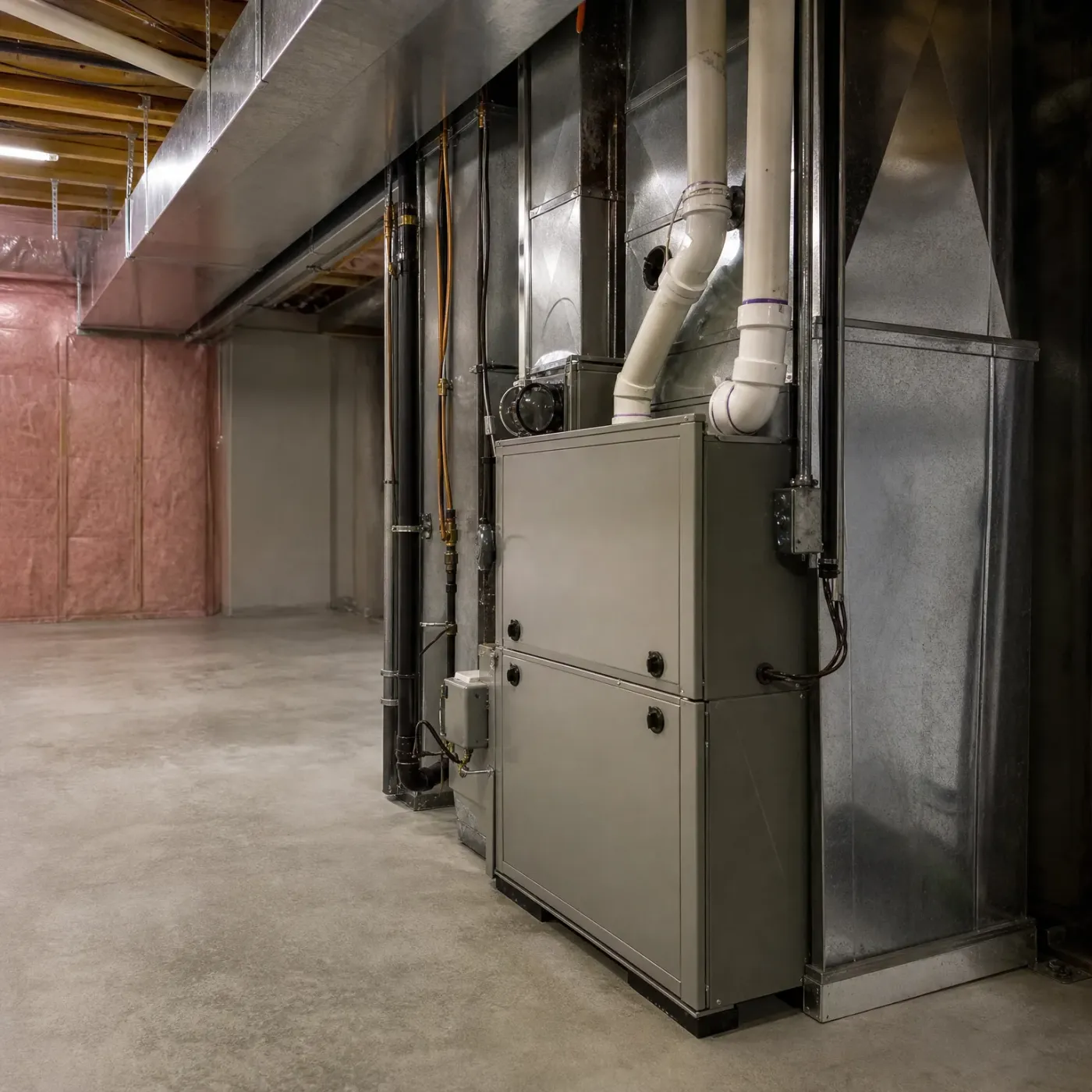
An unfinished basement with a concrete floor, pink insulation on one wall, exposed joists, galvanized sheet-metal ductwork, PVC vent pipes, and a tall gray furnace with attached gas and electrical lines.

Let someone else find the pro

Fill out one short form instead of calling around.

One request ends the search for a furnace installer.

Answer a few questions

You only hire the pro if you want to.

Repair the Furnace or Replace It

Keep repairing

  • An old furnace can keep running for another winter or two if the heat exchanger is still sound and the repair is a part, not a crack.
  • You pay for the one fix in front of you, not the whole system, so the bill that month stays smaller.
  • Every repair past 15 years is a bet against the next one, since parts for an older gas furnace get harder to source.
  • A furnace that's needed two or three service calls in the same winter is telling you something about what's coming next.
  • Staying with the old unit means living with whatever efficiency it had when it was installed, gas bill included.

Replace now

  • A new furnace comes with a warranty that covers the heat exchanger and the burner, so the next 10 years aren't a gamble.
  • You stop guessing whether the next cold snap is the one the furnace can't keep up with.
  • A correctly sized furnace heats the house evenly, instead of running long cycles to cover for a worn-out one.
  • The upfront cost is higher than a repair, but it's the last furnace bill you'll see for years.
  • Once it's installed, there's nothing left to schedule or follow up on before winter sets in.
  1. Burner ignites and the heat exchanger starts warming up

  2. Blower pushes air across the hot heat exchanger

  3. Warm air travels through ducts into each room

  4. Thermostat senses target temp and shuts the burner off

Winter nights average 21°F statewide

21°F is the average overnight low here from December through February. That's below freezing most nights, so your furnace is running for hours at a stretch, not just kicking on now and then. A unit on its way out tends to show it on those coldest nights first.

NOAA nClimDiv 1991-2020 county normals weighted by homes

Where Your Furnace Stands

  • A gas furnace in Utah runs 15 to 20 years, and 18 winters is a fair point to start expecting trouble.
  • Most of the wear comes from the hours logged on the coldest nights, not from the calendar alone.
  • A sound heat exchanger means repairs still make sense; a cracked one means replacement is the only safe call.
  • Once a furnace passes that range, a cold snap it can't keep up with becomes a real risk rather than a maybe.
  • Sending one form means you skip calling around, explaining the same problem twice, and sorting through quotes yourself.
  • Knowing where your furnace sits in that 15 to 20 year range tells you whether to plan for a repair or a replacement.

Fifteen to twenty years is the range, and most of what wears a furnace down happens on the nights it has to run hardest, not just from sitting in the house for years. A furnace installed with the house in its first winter and still going at 18 has had a good run. What happens next depends on one part: the heat exchanger. If it's still sound, a repair is a reasonable answer and the bill stays tied to that one part, not the whole system. If it's cracked, there's no repair that makes that safe to keep running, and replacement is the only call left. Past that 15 to 20 year mark, the risk isn't abstract anymore. A cold snap that an aging furnace shrugged off five years ago can be the one it doesn't keep up with now, and you find that out on the night you need the heat most. Knowing roughly where your furnace sits in that range is what turns a guess into a plan, repair for now or start looking at replacement before the next hard freeze decides it for you. Once you've got that answer, the rest is logistics. Sending one form means you're not calling contractor after contractor, repeating the same description of your furnace each time, or sitting with a stack of quotes trying to compare them yourself.

A gas furnace with attached PVC and metal piping and sheet-metal ductwork stands on a concrete pad in a dim unfinished basement with concrete walls and exposed floor joists.

One request and it's handed off

Explain the job once and skip repeating it on every call.

Step 1 of 3: Equipment