Tell us about the job
Takes about a minute. No obligation.
Sizing a furnace for a Weber County home means accounting for a burner that cycles through nearly the entire calendar year. Homes in Weber County, UT run heat about ten months a year, from September through June. The heat exchanger, the ignition system, and the burner itself carry that load without long breaks, so a furnace that was sized too small or commissioned without a proper load calculation wears on those components sooner than an owner expects. A contractor quoting a replacement here has to verify the load calculation before anything else, because a box that fits the old opening is not a box that fits the house.
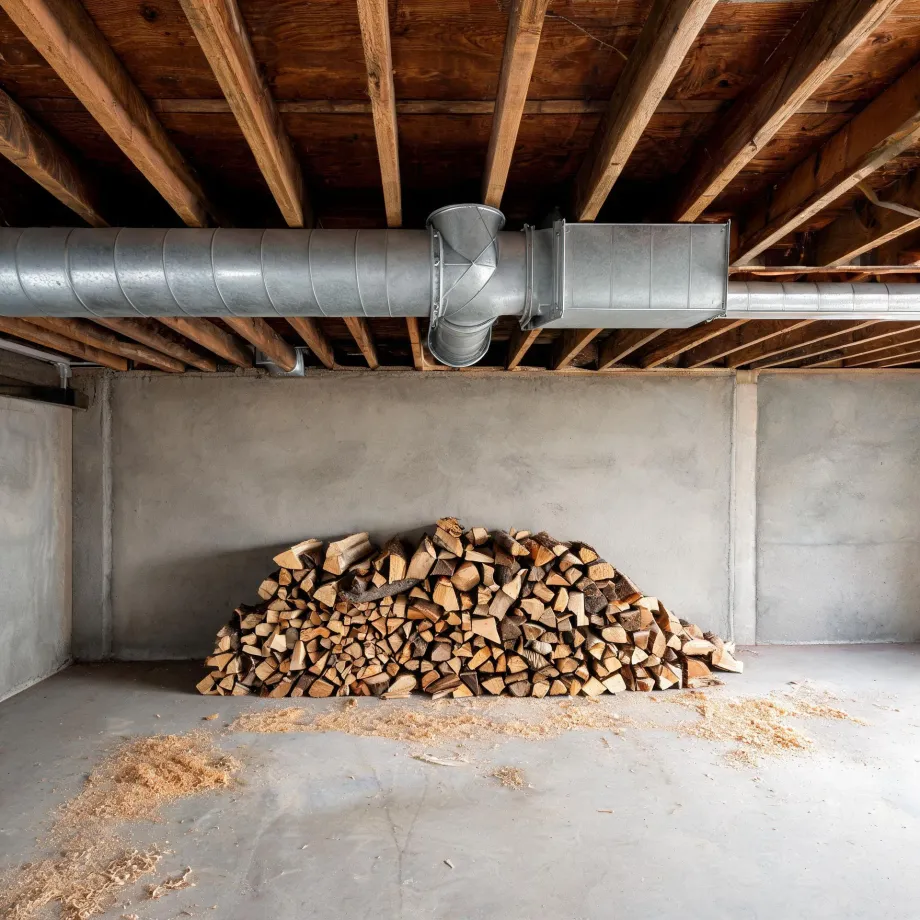
Older ductwork is the real question on a furnace installation in Weber County, and the answer lives inside the walls before anyone prices equipment. Half the homes in Weber County, Utah were built in 1984 or earlier (2020-2024 ACS 5-year). A house from that period was ducted around different output assumptions, and a modern furnace drawing at higher capacity will either move air poorly through runs that were never sized for it or create pressure imbalances that shorten the unit's life. A contractor will measure what the existing trunk and branch layout can actually carry before the equipment conversation starts.
What Gets Installed With a New Furnace
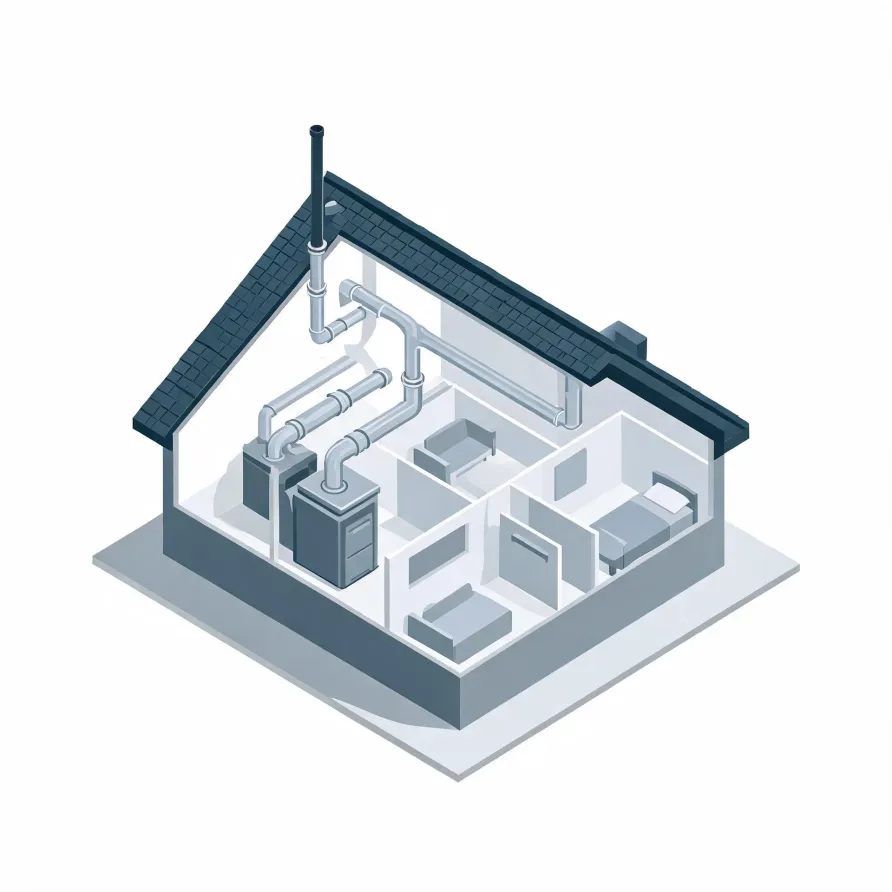
The furnace itself sits in the basement, utility room, or garage and is the unit that generates heat. A heat exchanger lives inside it, separating combustion gases from the air that moves into your home. The flue pipe runs from the furnace to the exterior, carrying exhaust out of the house.
The air handler, or blower, pushes conditioned air through the supply side of your duct system and sits within or directly beside the furnace cabinet. The thermostat mounts on an interior wall and is the control point that tells the furnace when to fire and when to stop.
The drawing shows a typical layout, and a licensed contractor determines which configuration and components apply to your specific home.
Get matched in Weber CountyWeber County, by the numbers
147 severe weather events were recorded in Weber County, Utah between 2015 and 2024.
NOAA National Centers for Environmental Information, Storm Events Database, bulk CSV export, events 2015-01-01 through 2024-12-31.Half the homes in Weber County, Utah were built in 1984 or earlier (2020-2024 ACS 5-year).
U.S. Census Bureau, 2020-2024 American Community Survey 5-Year EstimatesWeber County, Utah holds 100,568 housing units (2020-2024 ACS 5-year).
U.S. Census Bureau, 2020-2024 American Community Survey 5-Year EstimatesOwners occupy 74.1% of the occupied homes in Weber County, Utah (2020-2024 ACS 5-year).
U.S. Census Bureau, 2020-2024 American Community Survey 5-Year EstimatesFurnace Installation Rules & Codes for Weber County, Utah6 sourced standards and regulations
What the Installation Actually Looks Like
Non-weatherized gas furnaces manufactured on or after November 19, 2015 must reach 80.0 percent AFUE.
Non-weatherized oil-fired furnaces manufactured on or after November 19, 2015 must reach 83.0 percent AFUE.
Mobile home gas furnaces manufactured on or after November 19, 2015 must reach 80.0 percent AFUE.
Non-weatherized gas furnaces manufactured on or after December 18, 2028 must reach 95.0 percent AFUE, up from the 80.0 percent minimum that applies to units manufactured before that date.
Licensing and Legal Requirements in Weber County, Utah
Utah’s contractor licence does not reach alteration, repair, remodelling or improvement of a building worth less than $7,000 in labour and materials together, counting every change and addition to the agreed work — though the plumbing and electrical trades are pulled back under licensure even below that figure.
Utah requires a state licence before engaging in a licensed construction trade or contracting activity, and HVAC contractor is one of the licence classifications the state issues.
Severe Weather Events in Weber County
Weber County weather puts real demands on heating equipment over time. A furnace that fits the local climate handles those demands without being pushed past what it was built for, and that fit starts at installation.
147 severe weather events, 2015–2024. Source: NOAA National Centers for Environmental Information, Storm Events Database.